Hello, and welcome to the ILO’s Future of Work podcast. I’m Ibon Villelabeitia. Imagine living somewhere where almost nothing can be wasted. Where water, air and other resources have to be recovered, recycled and reused – because your life depends on it. That’s everyday reality aboard the International Space Station. So, what can living and working in space teach us about how we use our finite resources here on
Earth? And as we move towards a more circular economy, what could that mean for businesses, for the way we work, and for the people whose jobs help make that transition possible? Because the circular economy isn’t just about materials and technology. It’s also about Workers, the people who repair, reuse, recycle, recover and redesign the things we make and consume. And for the ILO, that raises an important question: how do we make
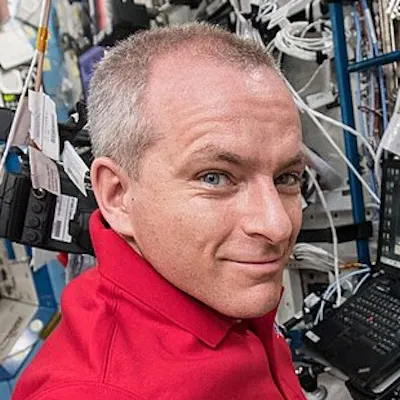
sure this transition creates more decent work? I’m joined today by Canadian astronaut David Saint-Jacques, who spent 204 days aboard the International Space Station, and Casper Edmonds, the International Labour Organization’s expert on the circular economy and the world of work. Welcome to you both. David, let’s start 400 kilometres above us. When you’re living on the International Space Station, what happens to something as basic as
the water you drink? How much of it gets reused? Hello Ibon, thanks for hosting this. You start with a very important question. Water is life as we all know and water is heavy, but you know a kilo a litre. So it is a resource that we cannot afford to send to space for daily life and we cannot afford to waste it either. Now, the good thing is, if you think about it, every astronaut on launch comes with all the water they need in their body for that day. So, it's just a matter of
recycling it and you're in principle good forever. Look at the picture up here. Earth here in space. There is no tube bringing new water, right, or new air. It's all recycled. So, we try to do the same aboard spacecraft. It's been a long process over decades since the beginning of space flight. We used to bring all the water we needed because we weren't smart enough to recycle it. But now currently on space station, I just looked up the latest result and it's about 98% recycling. That's
recycling our urine mostly. And then recycling the condensate from the air conditioning system. These are two, you know, major sources. Now, every time I say this, people go, "Yeah, it's gross." But you think about it, there is no such thing as new water on Earth either. When you get water from a bottle, that water came from a well or a river, which came from the clouds, from rain, which came from the operation of the oceans, which came from every source of water,
including our waste water. So, every time you drink a glass of water on Earth that you think is new, there's probably actually a little bit of recycled dinosaur pee in there. So, we're just trying to do the same. 90% is not bad. We'd really like to get to 100% just like Mother Earth does for us. Well, that's very interesting. What does living in space teach you about the value of resources that we perhaps take for granted here on Earth? It's a good question. It there are some things that we take for granted. Water is one of them. Air is another resource that we take for granted that in space we really have to think about it. But it does bring home to you the fact that Mother Earth
here gives us most of what we need. It is a it dawns on every astronaut eventually through the mission that they're living in a spacecraft in a environment that is entirely man-made, entirely the result of human invention and creativity. Even the air we breathe is manufactured. So this notion of resource is not just one of the important things. It is all there is. Humans on their own have no chance without the resources that are needed to keep them alive and
that's definitely part of the of spacecraft design. And as we look towards more distant destinations, going back to the moon, we've all heard, and eventually to Mars, resource management becomes absolutely central. You said Mother Nature gives us everything you need, but I've always been curious what happens when something breaks in space. You cannot just simply throw it away and order another one, right? How do you deal with that? Breaks your heart when something breaks first because your life depends on this life support machine. If it's an experiment,
you know, it's been some professor's all career probably to make this happen. So everything around you, especially when you're on a space walk, is clearly fragile and expensive and you got to be careful about it. So A, we really try hard not to break anything. B, when it happens we really try to repair it and if we can't we wonder if we can reuse it, and if we can't we have to get rid of it because we cannot keep trash around. That's a process that I think has not matured yet in space
in space mission management because we essentially, going to put it simply, so we have resupply cargo vehicles that come to the space station every couple of months and they bring us new food they bring us some consumables experiments, spare parts, and then they become dumpsters once we got all the goodies from them. Then that's where we put our trash. I think we can certainly do better, but that spacecraft goes back to Earth and it burns upon re-entry, becomes a shooting star. Now, Casper, to you, listening to David talking about recycling, reusing, remaking. How much
of this thinking translates to the circular economy here on Earth? Well, we can learn so much from David and his colleagues. What David is describing that they're doing in in space is essentially the core elements of the circular economy. It's thinking very cleverly about how to sustain resources for as long as possible. And it starts with putting a real value to those resources. We heard David say that it's what their life can is is basically made of. David
was talking about the importance of repairing. If you can't repair it, then you refurbish it and use it for something else. And only what cannot be reused, repaired, maintained, you recycle. And then eventually, you end up with a little bit of residual waste, and those are the core elements of what is the circular economy. It's defined by the 10R framework where it starts with rethinking our economies. It starts about reducing our consumption patterns and then it goes into exactly the reuse,
the repair, the refurbishment and the recycling that we've heard and that's where we can learn so much from what space exploration is showing us. So the circular economy even though it can sound like a model for the future, it's in many ways it's already here as you're explaining. Your research at the ILO suggests that between 121 and 142 million people are already working in the circular economy. Can you tell us a bit about who are these people? Well thank you for mentioning our research which we've done together with the Circular Economy Foundation and the World Bank group and which is
financed and with technical support from the Partnership for Action on the Green Economy. They tell us these numbers that people are working in the circular economy in all countries, in all sectors of our economy. That's basically because for a lot of people being circular is not an option. It's a way of getting by, as it has been for humankind for centuries. These people that we capture in our statistics, and it's only really the tip of the iceberg. They work in repair,
they work in maintenance, they work in recycling, they work in waste picking. I've been so fortunate to work with these people for 26 years, since I started working for the ILO and some of them are absolutely amazing. Let me mention Marta Uetela who's a young woman entrepreneur from Mozambique. When her friend was in a car accident and lost his leg, she, a young engineer, decided to do a new project whereby she and her friends would collect plastic from the ocean convert it into
small nodules that could be used to 3D print prosthetics and wheelchairs. For me, this is part of the way forward. That ingenuity, that entrepreneurship, that technological innovation. Another hero of mine, a circular hero of mine is Vidyadhar Rane who's a trade unionist in India who went up to Alang where our proud ships are broken and recycled at the end of their lives. And he
organized the mostly illiterate informal workers into a ship recyclers' trade union who since have been able to bargain for better working condition so that the fatalities and injuries that they sustained have been significantly reduced. Thank you. Casper mentioned one of the Rs of these circular economies are of rethinking. David, I want to go back to you to bring the conversation to our everyday behaviour. Living in space must must change certainly some very ordinary habits that we
all have. Are there any things you learned to do differently on the space station that stayed with you when when you come back to Earth? Thanks for the question because it's a very personal question I guess. This this notion of scale and the fact that not so much of the earth is beautiful and incredible and improbable, which it all, is so graciously slowly moving you know in the depth of the the blackness of space. But what's really transformative is when you look around the
context where we are and it really strikes you that we are in the middle of absolutely nowhere and there's a lot of nowhere around. When you're on Earth you can get the illusion that the earth is big, strong the ground is solid the sky is huge, the oceans are infinite, and the human scale that's what it all looks like. It's just not that. So it is really striking how exposed we are and the deadly vacuum of space. How there is no new air, no new water, no new anything. It's all recycling,
and how there's really nowhere else to go. So that is that that's a bit sobering. I mean a you find the earth amazing and you want to fall in love with her even more, but it's a bit sobering to see how exposed we are. Now the flip side is that despite all the geopolitical tensions that we all painfully aware of, despite the great, you know, environmental challenges and energy challenges that we all face, space as an endeavour is like a daily example that when they decide to do so,
humans can work together. We can, we can. It's a really a matter of deciding to focus on what we have in common as opposed to what we what differentiates us. So, these are the major perspective. Now specifically in terms of the environment I think just a renewed love for my planet is what it boils down to. We belong to the planet. We make no sense away from it and we're a part of earth. So, I think that has, that's maybe the most important sort of life-changing
treasure that I bring back from space mission. I that I try to pass on to kids. It's okay to be both. It's okay to be a human being that tries to better their life, and it's okay to accept that at the end of the day we are we belong to the planet. So, listening to you, it seems that living in this fragile environment that you have seen up there better than us in space has made you think about how fragile our ecosystem here on Earth is as well. Absolutely. I mean it was not it,
was at no time stronger than when I was wearing a space suit on a space walk outside space station in my own little kind of you know human- shaped spacecraft, really is what a space suit is with all the systems, and it was obvious that wow, I'm here alive talking to my friend in mission control working on my house only thanks to the ingenuity and teamwork of tens of thousands of people over decades because otherwise, I should be dead. This is such a ridiculously dangerous thing for a human
to do and such an unforgiving environment. Yet, that's the power of the human imagination. Well, that's a very interesting perspective you're bringing in there. And David, you mentioned technology. What about electronic waste? It is a particular challenge and I'll explain why is because the environment in space the radiation environment is much harsher and electronics are fragile to radiation, so their life is shortened. They get cosmic rays solar radiation hitting them
much faster and eventually all electronics get hit and eventually they die. The circuits are well designed, but it's the environment is so much and it's in your face, so to speak, because those radiation hits that will kill your electronics eventually. They also trigger your retina. So, at night, your eyes are closed, you see little flashes of light. These are radiation hits that you can see and you know they're peppering you. Casper, let's, now back to you. Let's talk a bit
about the decent work and we've been talking about the opportunities of a circular economy, but more than half of the people already working in in it are in informal employment. How do we make sure that the transition delivers decent work as well as environmental benefits that David was mentioning? Yeah, let's look at the good and the bad here. The good, the opportunity is that in the e-waste we generate annually on Earth, the value of these minerals, silver,
gold, is more than 65 billion dollars. That's a huge value that e-waste entrepreneurs can tap into. There's a robot that can pick apart an Apple iPhone like in 100 seconds. So there's already technology innovation that people who want to capture the value so that these valuable resources can be reused, remanufactured and be put to good use again, and not just wasted away in a
dump somewhere or in a river. That requires investments in an enabling environment for these e-waste enterprises and other sustainable enterprises. It requires investments in skills, and in the day it also requires responsible business conduct requires that electronics are designed in a way that we can take them apart and reuse them. And the other side of the coin is that, as I mentioned, before most people in the circular economy work there because they have no choice.
They are among the most vulnerable on our planet. Think children. Think migrants who have no other choice than to pick through the waste that we have generated to extract that value by hand. These toil in the informal economy with no protection, often in very poor working conditions and very limited opportunities to enjoy their fundamental principles and rights at work. It is of course for these people that we in the ILO come in, as much as is this for the
entrepreneurs. Our overall approach to this is to ensure what we call a just transition. The elements I have mentioned from an enabling environment sustainable enterprises to workers' rights are part of that overarching framework. But to be more specific, we have just launched, last year the ILO policy guidelines for the promotion of decent work in recycling. This is like a detailed manual, maybe not as detailed as the manual for operating
the International Space Station is, but it is very detailed policy advice to governments, to workers, and employers on how you can harness the opportunities in the circular economy and also in e-waste and how you can address the challenges so that no one is left behind in that transition. But this transition won't happen overnight. What kind of difficult choice and and challenges will workers and businesses face along the way? Well, it won't happen overnight,
but we have to take action now. The transition, it involves basically extracting less. It involves manufacturing less new stuff. It involves more remanufacturing and repair. So, what we will see from economic perspective, is a transition of employment from extractives to manufacturing to more services jobs, because we have been at the linear economy for a long time. The extractive
jobs to manufacturing jobs, they're well paid many of them they're organized, there are many enterprises and workers who are wedded to that economy. The shift to moving to a circular economy is going to be as big as it was when the global economy after the Second World War went from a wartime economy to a peace economy. So, 77 million jobs will be created but 70 million jobs could be destroyed or changed and that's the transition that we have to manage. So it won't happen
overnight. But we have to start now, and the better prepared we are we can ensure that the transition becomes just one of opportunities and one where we leave no one behind. Let's go now back to David. You describe space as a worldwide collaboration at its best. What did your experience of living on the International Space Station teach you about our ability to solve difficult problems when we work together? The reason why this improbable collaboration works so well, you know,
among the members of the International Space Station, there's Russia and the United States, for example, all of Europe, Japan, I mean, all these countries that used to generations ago be at at war with each other. The reason why it works is incentivization. It's because these agreements have been well crafted in a way that it's win-win and nobody is an advantage to sink that ship that we're all on. It's amazing to have the privilege to work in this international world. It makes you feel at a very personal level and realize, okay it's true that people are the same
all over the world. I mean the variety is the same, and the nuances of culture and nation or and ethnicity are kind of details compared to the bulk of what we have in common. Love our kids, want a future, want safety, want to do the right thing. We can follow that example as we think of more global questions in general. And Casper, this idea of cooperation is also central to the ILO's approach to a just transition. What role do do you think that social dialogue between governments, employers and workers play in making this shift to a
circular economy work? Now in in the ILO, I mean the organization was founded on the belief that we are better together, that by having governments come together with employers and workers you can find win-win-win solutions instead of fighting it out in the streets. And that has been as David said, pinned down in some very clever agreements. In our case, it's our Constitution which basically
has created incentives for Member States from all over the world, 187 in total, to come back to the ILO and try to find solutions to the challenges that define our time. In this case, ensuring that the transition to the circular economy, which has to happen, becomes one that is just. Yeah, we are 100 year plus old organization. We've got some bruises on the way, but we're still here.
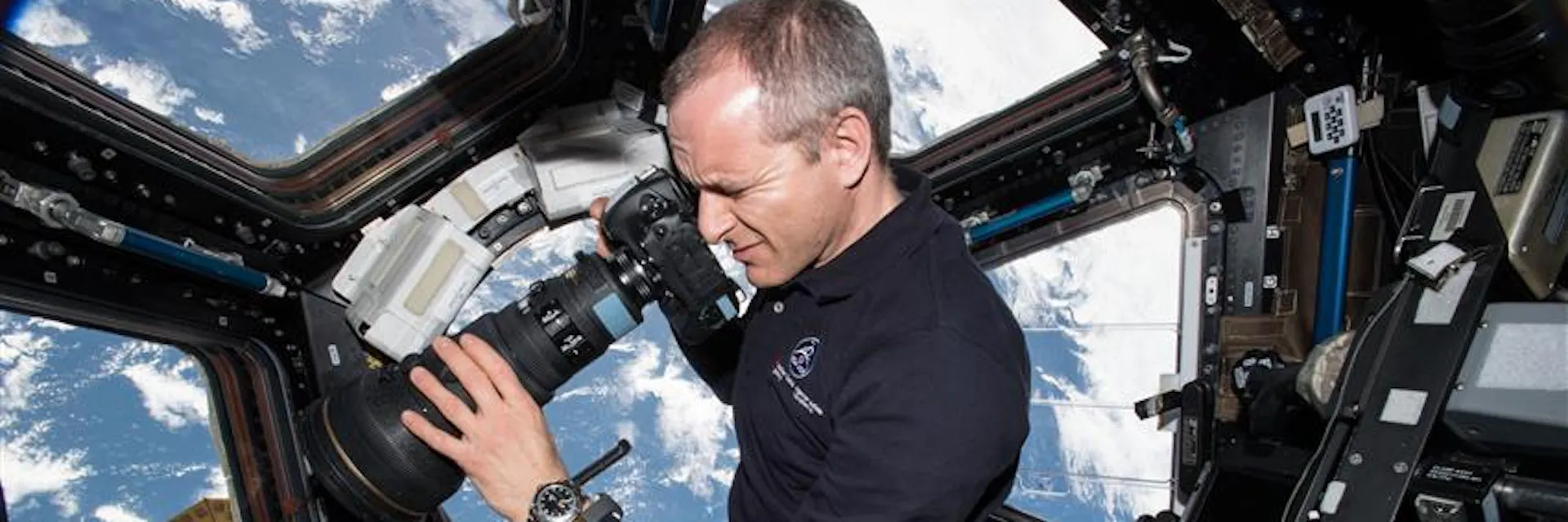
And that's because it was so well defined by those who founded our organization. And that will be the only way forward when we look into the future. And when we face the multiple challenges of a changing climate, of technological advances that come very quickly with very big impacts, of changing demographics, and also in this environment of geopolitics and a new era of globalization, David, you spent months photographing the Earth from space. I'm sure you've seen extraordinary
landscapes and cities, and I understand you also saw the huge plumes from wildfires in in Alberta. Casper was talking about responsibility. How did seeing our planet from that perspective, 400 kilometers from here, change the way you think about our responsibility for looking after it? I think you know I can close my eyes and see it. It's, you know, a little personal treasure that I brought back. I can just go back, float to the cupula, open the shutters in my mind and look
at the earth and see how see her gracefully turning in the deadly vacuum of space. So, she's so welcoming, you know, she's obviously the only living thing around. The moon is just a dead rock. The sun is just a ball of fire. All the other planets are hopeless deserts. The Earth is just unlikely. And the imprint of humans is everywhere on our planet. It's most
obvious at night, with the yellow sodium light of cities pretty much everywhere, or sometimes just like campfires in the middle, it's Bedouins in the desert. You can still see that light. There's, you can see there's a zigzagging of airplanes, their contrails everywhere. You can see major human infrastructure in the day and you can see cities, airports, biggest bridges. You can see that humans have really conquered this planet. But seen from space,
it's obviously one planet and one species, it's not countries, you don't see those borders, right? You don't see those vested interest. All you see is the common issues and the common interest. Well, thank you David. That's a really a fascinating perspective. And finally, Casper, maybe a final reflection. Maybe you want to bring back to Earth this conversation and what it means circular economy and the future of work. It's almost poetic to think that the International
Space Station circles the Earth and the Earth circles the sun. These are large circles of unique almost improbable life in the universe and I can imagine, David, that it's been inspiring to sit there in space and watch beautiful Earth in different lights. You know I'll tell you I'll share this something with you, my friend. What has had effect is, now, I
don't see much difference between space station and Earth, we're all astronauts this is our spacecraft we're on the mothership with the life support system zipping through the deadly vacuum of space. It's the same as an astronaut on board a spacecraft. But our spacecraft is Mother Earth, the mother ship. Indeed, and for us down here, looking up in the sky and seeing that little zip in the sky on a dark night, which is the space station passing by,
is for me truly inspiring. And when you were up there I actually felt you were closer for those 204 days than we had been for a while because the distance was only what 400 kilometers. That's true. Whereas which is way more than the distance between Geneva and and Montreal. Yes. So that was very, very deeply inspiring to see and we can as I said learn from space exploration.
We can learn about the technological innovation you show us, the basic science you generate. We can learn from how you recycle things in space, how you repair it, how you keep it in use, how you think about how you can sustain life. And that we can take down to what you say is our spaceship, Mother Earth, or everyone's spaceship that circles through the universe around the sun. One thing to remember is the circular economy is not automatically green. It's not in and
for itself more inclusive or fair. It is only what we make it. It's only what we invest in it. By extension, it's only if we bring together everyone, governments, employers, workers, civil societies, the waste pickers, the entrepreneurs, that we can create a circular economy that works for everyone, one that creates decent work,
and one that helps sustain life on our beautiful planet, within our planetary boundaries. Well, David, Casper, thank you both for this very fascinating conversation. Thank you, Ibon. Thank you. And to our listeners, thank you for joining us. If you’d like to find out more about decent work in the circular economy, visit our website at ilo.org. You can find out more about David Saint-Jacques and his work through the Canadian Space Agency.
You can also follow the ILO on YouTube, Facebook and LinkedIn at @International Labour Organization, and on Instagram, X, Bluesky and Threads at @ilo.org. Until next time, goodbye from the ILO’s Future of Work podcast.