[music] Hello, and welcome back to the ILO's Future of Work podcast. I'm Sophy Fisher. [music] For young people, finding that first job or starting a career after education is often a challenge, but it's a critical development moment, moving from dependent childhood to adult independence. But even if you have had good, stable schooling and you live somewhere with organized systems and programs, it's stressful.
Just imagine then how much more difficult this transition is for young people who are also refugees. They may have had their education disrupted, have restrictions on their options and movement, or be dealing with the trauma of forced displacement. This is a significant issue because 54% of all refugees are under the age of 25. That's a lot of potential talent that isn't being fulfilled. Today, I'm being joined by two young people
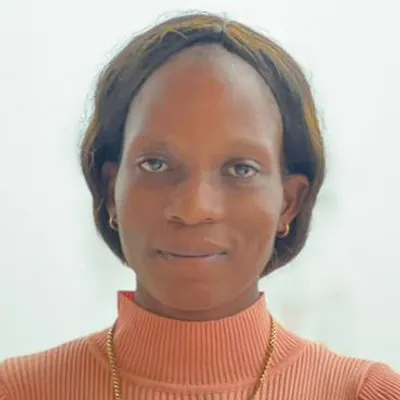
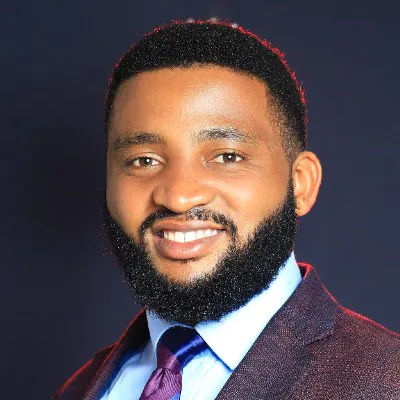
who have direct experience of this problem. Not only that, they are both involved in helping other young people find work and independence. Mashimbo Rose Nafisa's family fled the Republic of Congo in 1994 and she was born and raised in Uganda. She now lives in the Nakivale Refugee Settlement. Joel Amani Mafigi is also a refugee in Uganda. He was born in the Democratic Republic of Congo but was forced by insecurity to flee in 2008.
Rose and Joel, welcome and thank you very much for joining us today. Thank you so much. Joel, can I start with you? Tell us a little bit about how old you were when you left the DRC, and what consequences that had for you in terms of education and your transition into the world of work. Thank you so much. When I arrived in Uganda, I faced challenges to integrate within education. One, because of language barrier. DRC is a French-speaking country, so getting integrated
into the English system was really difficult. I remember my mother took me to school and she wanted me to get enrolled into secondary just like I was in DRC, but the head teacher told her that I could only begin from primary three. I started from there, primary three. I was studying as an old boy amongst what I would call students younger than me.
Very difficult to integrate. When I finished my secondary school, I wanted to become a doctor, but when I finished my high school, I realized that actually there were a few jobs that were available for doctors in Uganda. The question I had, will I join the 80% of graduates who are unemployed, or I should take a step and start
an enterprise that will then create more jobs for other youth? This is where I joined one of my teams, and then we started off with UNLEASHED. Right, Okay. Rose, let me ask you, you were actually born in Uganda into a family who were refugees. What kind of education were you able to get? What kind of skills? Actually, my story is a bit different from Joel's,
because having been born in Uganda and raised in Uganda, I had chances. I had rights to education just like any other Ugandan child. I also did biology, chemistry, and math with a dream of becoming a medical doctor. Unfortunately, my parents couldn't afford taking me for higher education because there are very, very limited chances of scholarships for higher education when it comes to refugees. All that was left was to actually look at how can I use
the skills or the little education that I have acquired from the secondary life and actually use it in the community to help people use the best of it. That's how I joined the Stand For Change and Unity, which is a youth-led organization, a refugee-led one. In that, we do a lot of projects in line with education, livelihood, social entrepreneurship. That's interesting. Both of you clearly were pretty good academically
as far as secondary school, but then were unable to pursue your first choice of medical career because of the lack of opportunities. Joel, were you like Rose? Was that the source of the inspiration that encouraged you to devote your career to helping other young people actually fulfill some of the talents and dreams that they had in a way perhaps that you were frustrated? I was very much frustrated with the lack of jobs
because I had firsthand experience of youth even from the host community in Uganda who had completed their secondary and they were unable to find jobs. For me, that became the inspiration. The question now was how might we create jobs so that youth can be self-reliant on themselves.
Right. Now, you are both involved in a number of different projects and programs to help young people get into work, but what do you see, from your position actually at the grassroots, as the greatest barriers to this? We've talked about a lack of a stable education, but is it just that or are there other things too? Joel, let me start with you. Personally, when it comes to joining work and getting jobs,
one of the greatest barrier that we have experienced is the mindset. When I speak about the mindset, I am speaking about the resettlement mindset, because most of the refugees when they come in the settlements, what they are looking at is being resettled to the third country. If one is actually looking at resettlement as the only option of hope,
then it is difficult for them to integrate and create livelihood around themselves. We are saying that, at least from our point of view, that resettlement can be one part of the solution, but creation of livelihood, job, employment can start from where someone is because this is what we have also done for the last six years. Right, Rose, let me put the same question to you. Are there actually some practical barriers as well that young people face,
or is it simply the mindset and the lack of education? It all starts with mindset. For them, long-term projects are a no-no to them because they feel like anytime I'll be leaving. They want projects that work instantly because they feel like anytime they'll be resettled. It's mindsets, at the same time, the lack of information that hinders young people to do what they're supposed to be doing. How do you overcome that mindset to try and give the young people
the attitude and the skills that might help them? Social cohesion is really, really, really very important because one of the challenges we had realized earlier along is that, for example, Congolese would buy from Congolese alone, or Rwandese buy from Rwandese alone, Somalis buy from Somalis alone, which in the end does not maximize the potential, but also does not bring about the aspect of innovation. Bringing in the aspect of social cohesion is a wake-up call
to support different nationalities within the settlement cohesively and peacefully do business together. Rose, would you agree with that? Yes, I agree with that, but then I would love to add something. As we do all the things that Joel is talking about, we also try to show them that the skills that they are earning here in the refugee settlement, or the things they do here are not going to stop just here. Even when they get a voluntary repatriation,
it's the same skills that they have earned while they're in the refugee settlement that they will actually use even when they go back home. We try to show them that the kind of life you build here or the lifestyle that you live in here is actually something that contributes to the life that you live even after the settlement. When we do social cohesion, we make sure we group them in two groups that consist of different nationalities, including even the host community, so that as they're doing things together, they're able to learn from each other and understand
that this one is doing it this way, then why not me? As they learn from each other, the mindset keeps on changing slowly by slowly and we believe we'll get there. Rose, you mentioned you bring people from the host community in. How important do you think it is to involve the host communities, Rose? I believe it's very important because, first of all, for the refugees to actually work very well, they need the help of the host community because in most cases
if you look at the Nakivale Refugee Settlement, most of the refugees actually earn their income from agriculture. When you talk about agriculture, it means that we need pieces of land and the raw materials for the agriculture to take place. If they do not collaborate with the host community that actually has pieces of land or chunks of land that they're not using, then it means that these refugees will actually starve because the pieces of land on which we are settled
cannot be enough for us to produce enough food for the refugees to sustain themselves on. Right. Now, both of you have worked with the ILO's PROSPECTS project, which is a partnership for improving prospects for forcibly displaced persons and host communities. Joel, I think, it has helped you with your organization, UNLEASHED, which works with refugee youths
through social entrepreneurship and business development. Rose, I think you have been a trainer for PROSPECTS. Joel, let me start with you. Do you think that that has been helpful? Is the approach correct? Yes, 100% at least from my point of view. Since we started our engagement with the ILO PROSPECTS, I can say the program has really, really been very empowering. In the past, it was difficult to involve
with international organizations because, one, they lacked trust in the refugee-led organizations. Now, having a partner like ILO through the PROSPECTS program work with the refugee-led organization like UNLEASHED, and of course, Stand for Change, is a very, very big milestone. I can say right now we are recognized in our communities, and also being trusted, not only by the local leaders but also with the participants that we deliver these services.
Rose, has it helped you with your work in inclusion? Also, I think you've been working on entrepreneurship development with PROSPECTS? Yes, it has helped us a lot because first of all, the approach the ILO users is really very-- I don't know. Let me call it beautiful because I feel like we are engaged in everything that we do. They don't just design something and throw it at us. We are engaged in the design, we are engaged in the discussions
that come before projects start. Every other time we feel like something needs to change, we're always given an opportunity to raise issues, and they're worked on. It has helped us earn trust, not only to local leaders but also to other partners in the country. We are able also to get other donors or partners that are willing to work with us. They have that trust just because they've seen us work with an international organization. That's good to hear. I'm afraid, we're virtually out of time, so let me just finish
by asking you both a short but possibly tricky question. Can you each suggest one thing that could be done, either by the multinational system or locally, that would help you in your work? One extra thing. Joel, let me start with you. One of the thing I would really request is trust for the refugee-led organizations,
that they are able to deliver, to also create impact within their own communities. I'm requesting that we can have refugees on the table most often, but also discussing matters and contributing to the livelihood development, job creation, and the education development. That's a good practical suggestion. Rose, how about you? My suggestion of that would be
that if only the country would help us to minimize on the restriction they put when it comes to documentation. Because for my organization there are very many things that we would want to do out there, but you find there are so many restrictions when it comes to documentation. All that comes because we are refugee-led. We don't get access to certain opportunities just because we're refugees. If that could be worked on then we'll be good to go.
Thank you. We must leave it there, unfortunately. My thanks to Mashimbo Rose Nafisa and Joel Amani Mafigi for joining us today. Also, thanks to you our listeners for your time and for your attention. Please join us again soon for another Future of Work podcast. Goodbye. [music]