[music] Hello, and welcome to ILO's Future of Work podcast. I'm Belinda Japhet, your host for today, and I'm joining you from Tanzania. Today, we will be looking at how Ethiopia is restructuring its tourism sector and what opportunities this poses for its people. Ethiopia boasts a wide array of tourist destinations, from archaeological and heritage sites, national and conservation parks,
to music and cultural festivals. Ethiopia is positioning itself as a major tourist destination and its government has reviewed and updated the country's tourism policy to reflect this. The tourism sector is now one of five priority sectors in the country's 10-year plan and is expected to be a major source of revenue and employment in the country. However, there are some obstacles challenging the sector's development. Today's special guest, Mr. Tewodros Derbew from Ethiopia
has played a key role in updating his country's tourism policy and sector in general. Mr. Tewodros is a strategic team leader and coordinator at the Ministry of Tourism in Ethiopia and he will be updating us on some of the great developments in his country's tourism sector. Mr. Tewodros, thank you so much for joining us today, and welcome. Thank you. It's my pleasure having you and joining this discussion. It's great to have you, and very timely too as well.
Maybe you could start by introducing yourself to us briefly and giving us a brief overview of your vast experience working in Ethiopia's tourism sector. Okay, thank you. I have been working in the Ethiopian tourism sector for the last 15 years at different capacities. I joined the Ministry of Culture and Tourism, the former federal executive institution, which was tasked to develop
and administer tourism in Ethiopia. So, I joined as a junior expert and served as a director of tourist services, competency, and grading directorates, and then I transferred to the new ministry, that's the Ministry of Tourism, which is an independent institution tasked to develop Ethiopian tourism in a competitive and sustainable manner.
Thank you. 15 years is a long time to specialize in a specific sector. This makes you the perfect person for me to ask this question. What exactly makes Ethiopia such a unique tourist destination in the world right now? Ethiopia. There are some affiliations that may spring into people's mind when they hear the name Ethiopia. Ethiopia is a country endowed with marvelous cultural wealth
and stunning natural beauties that can offer seamless experiences to tourists and provide tourism investors with immense investment opportunities. Ethiopia is known for ancient history and age-old absorbing traditions. Ethiopia is home to cultural diversity, hosting more than 80 ethnic groups, meaning these ethnic groups have their own way of life,
their language, tradition, and customs. In addition, Ethiopia is also known for spectacular geographic formations and incredible geological resources. Our culinary tradition is quite unique and can provide tourists with immersive experiences. From farm to fork, we can think of our culinary tradition as quite an impressive tourism resource. Moreover, Ethiopia is only beyond imagining.
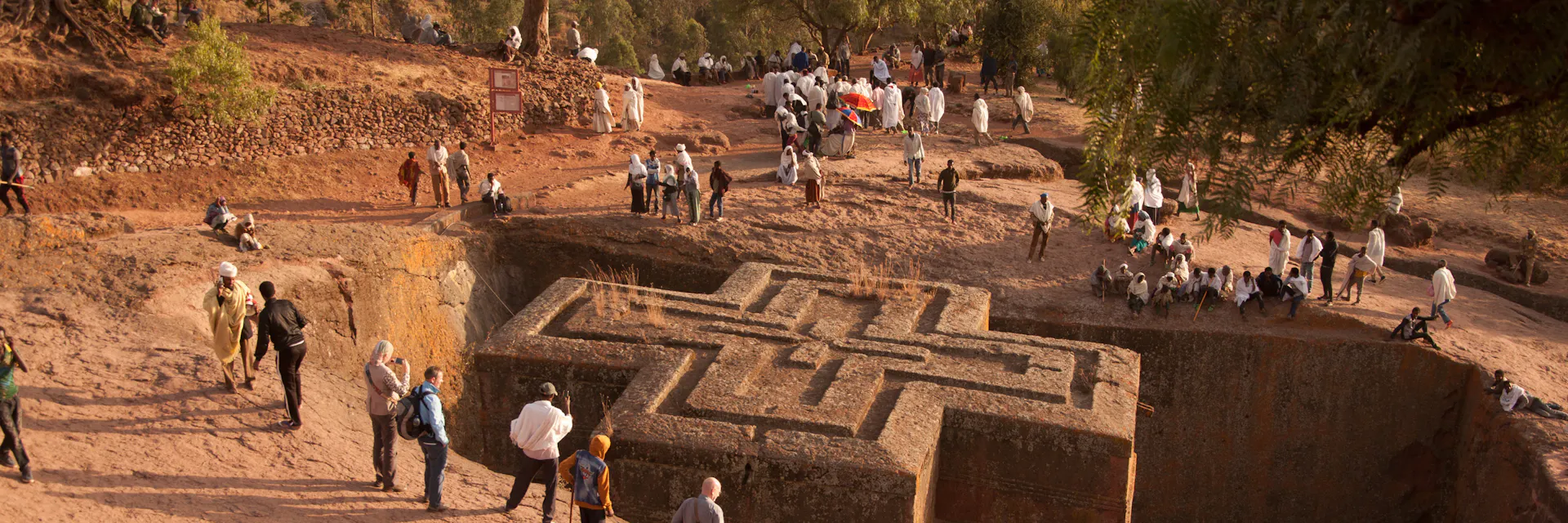
This has created an opportunity for Ethiopia to promote in the market diverse resources from the Aksum Stelae, that's in the Northern part of Ethiopia, to the miraculously build Rock-Hewn Churches of Lalibela, the Medieval Castle of Gondar. The three are called heritage sites. Ethiopia with its fabulous history of 3,000 years. Wow, that is a wide array of attractions.
I’m, actually, quite interested in coming there myself. It looks like a lot of people would be depending on this sector for their livelihoods. Could you tell us who exactly depends on the sector? The majority of the workforce is the youth and women. In terms of gender, 30% of the workforce comprises women and the 70% are men.
There are about 1.5 million people employed in the tourism sector. Of course, from five-star hotels, high-end facilities to the low traditional service providers, that's the traditional coffee providers. More than 60% of the tourism business is operated by the small and medium enterprises in Ethiopia. Even there are people who rent mule, especially for trekking
and other adventure-based tourism activities. More importantly, as Ethiopia is rich in tradition and culture, there are different kinds of handicraft products. So, a number of souvenir shops are there. There are operated mostly by the youth and women. They're totally more than 1.5 million people are working in the tourism industry at this and in other parts of the country,
especially at the destinations. Now, because it's such a big sector, I'm sure the effects of COVID-19 have been quite great. How has the tourism sector been affected by the COVID-19 pandemic? Tourism was heavily stricken by the COVID pandemic because, as you know, COVID has affected both the supply side and the demand side. It affected the source market, like Europe and America, Asia,
and also it is a global problem. Ethiopian tourism has been heavily affected by the COVID pandemic. If you look at pre pandemic level, 2019, more than $3 billion was obtained from the tourism industry, but there has been a decline of 72% since the outbreak of the pandemic.
We lost a huge amount of dollars from the industry and the volume of tourists has declined by 74%. You can imagine how big the impact of COVID-19 was. There was massive loss of jobs, hundreds of thousands of jobs were at risk, loss of foreign exchange and tourism revenues, tourism investment has been seriously inhibited,
skill migration for other sectors were also a trade, investment migration to some extent, and generally, tourism's contribution to employment and GDP has declined. By the way, to add an injury to a scar, Ethiopian tourism was not only affected by the COVID pandemic, but it was also highly affected by the Northern war in the country.
Tourism has been gravely affected by this two phenomena, but there is hope at the end of the tunnel. The government is working to make the sector revive. The government is working to make the sector recover and trying to protect jobs created in the sector. There are sound initiatives that would help to ensure resilience
of the sector in the country. Could you give us maybe one or two other points on exactly what the government is doing to help the country to recover from the COVID-19 pandemic? Yes. The first measure the government has taken was access to loan. The government has tried to provide loans with low-interest rate. This helped to hotels and similar establishments to retain their staff.
The other one, there are, of course, some support, especially for vulnerable communities, both material and financial support, but due to the limited capacity of the government, it was not as large as it was expected to be. There were efforts to specially help people protect from sinking psychologically and physically. There are this measures.
The Ministry of Tourism designed the recovery plan which would be implemented for three months. This basically focuses on stimulating the domestic tourism sector until international tourism resumes. You've touched on what the future looks like for the European tourism sector or what the government is working towards. More specifically, what kind of impact do you hope it will have on the people working in the sector, these structural changes
that the government is making? Our main focus is our policy initiatives or reform activities are geared toward improving the quality of life of the communities. Creating decent and sustainable jobs, generating foreign exchange, and also, sound use of ecological resources. We're just moving to ensuring sustainable form of tourism development,
tourism enterprises that would balance the social, cultural, economic, and environmental impacts of tourism development. This policies revision basically addresses the issue of community engagement and benefit. It would engage and empower the private sector, not the way we used to think, but in a way that would empower, that would meaningfully strengthen the private sector.
The role of the government will at the same time be strengthened. The policy will help us to save jobs. It would address issues related to operation or generation of new jobs. It would also improve the overall competitiveness of the tourism sector in a way that would offer seamless experiences to tourists, profitable businesses to the tourism business suppliers,
and benefiting the community. Ensuring of competitive and outcome-based marketing promotion activities is another area of focus. Digitalization and innovation across the tourism sector is also one of the strategic pillars of the policy. The last one is sustainability, community involvement for sustainable tourism development. We need to make sure that people benefit from the tourism activities
and people should obtain the well-deserved benefits from what they contribute to the tourism sector. Communities are put up at the epicenter of tourism development in this policy. Could you give us maybe a bit more detail on exactly how Ethiopia's new tourism policy is focusing on sustainability? Maybe just one area where you're putting down very sustainable routes where the sector can really thrive in the future.
We would like to develop destinations in a way that would conserve our resources, that would take into account local culture, that would take into account the natural setting. By sustainability, we mean we'll be developing our resources in a judicious way, putting the communities at the epicenter of any tourism activity. The other aspect is tourism businesses.
There would be standards and guidelines for sustainability. Tourism businesses, generally the private sector, would implement those standards. In such standards, we'll be able to create sustainable jobs, we'll benefit the communities sustainably. There are, of course, many points that this sustainability would address,
and the policy has given sufficient attention to this strategic issue. I would assume that young people are interested in working in the tourism sector in Ethiopia. What is the government doing to create more skills development for young people who work in the tourism sector? In the short term, the government has designed a program in corporation with training institutions and both middle-level and higher-level training institutions to identify knowledge and skill gaps.
Anyway, training programs are being designed to deliver something that would help the young people to work on the industry. Of course, given the youth can create opportunities, can employ themselves, there are many business opportunities in the sector. In the short term, the government is trying to fix the problem by providing a number of short-term and tailor-made training programs. In the long run, the government is working on designing
a focused human resource development strategy for tourism. This strategy would help the industry to feel, especially to balance the demand for and supply of skilled manpower for tourism. With regards to the work that ILO is doing with the government of Ethiopia in this area, what has been the impact of the collaboration between the government and ILO, especially under maybe the Global Program on Skills Development
and Lifelong Learning, in creating employment for young people in the tourism sector? What have you started seeing the impact of this program in creating more skills development? Once ILO started supporting the human resource development, the skills development aspect, for example, there are significant improvements in the area of hotel operation, tour operation, tour guiding, food preparation. This has been achieved because the curriculums were designed
in cooperation with ILO in a way that would match the expectations of the industry people. There are positive results and we strongly hope that ILO would strengthen partnerships that would help the tourism sector to produce competitive manpower. That's great. Yes, I think you've touched on some very key issues, especially the issue of practical training being such a perfect fit
for the tourism sector. How do you think the future of tourism and tourism skill development will look like in the future both globally and locally in Ethiopia? There are some key trends that we can understand globally, the number of young people is growing at an increasing rate,
especially in Ethiopia. Close to 70% Ethiopia population consists of the youth. The future of the global tourism industry, one is the increasing impact of the young population, and the other one is the digitization, all the digital platforms.
The digital platform has disrupted everything. It has fundamentally changed the way we conduct business. It has fundamentally changed the way we promote, we develop destinations. These two things are interrelated. If Ethiopia is to survive in the tourism market, Ethiopia should respond to the needs of the youth, on one hand, and should also develop its destination in a manner
that would satisfy the emerging needs and preference of the young population globally, and the same old story in the area of digitization. It will continue to be a story of those who are prepared, those who are not, and those who managed to adopt the change quickly enough. Thank you so much, Mr. Tewodros, for your time and thank you for your insight into the sector and into the sector in Ethiopia and looking forward
to hearing more things about the amazing future that lies ahead for Ethiopia's tourism sector. Thank you. From me, Belinda Japhet, that's all for today's edition of Future of Work podcast. Thank you and goodbye. [music]