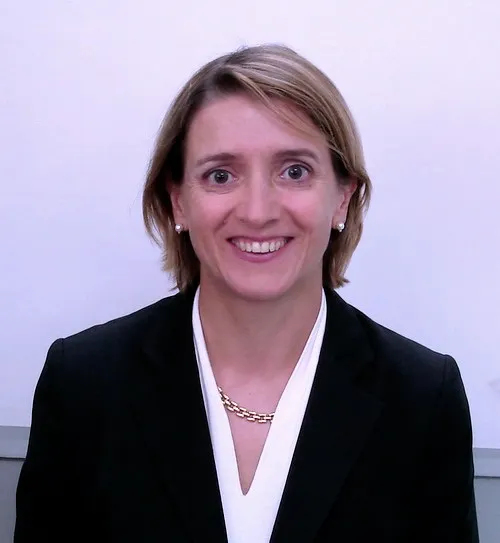
Hello, and welcome to this new edition of the ILO's Future of Work Podcast. I'm Sophy Fisher. Key workers play a vital role in our lives and in the functioning of the economies that we live in. This was one of the most important lessons of the COVID-19 pandemic. Yet during that crisis, it also emerged that many key workers face inadequate working conditions including low pay, long hours, and poor occupational safety and health. This has now been confirmed by a new ILO report on key workers,
the World Employment and Social Outlook 2023 on the value of essential work. The report describes the need for better conditions for key workers as one of the most important policy lessons of the COVID-19 crisis. With me now to discuss why this is the case and what those lessons might be are Janine Berg, who is senior economist at the ILO, and Iván Williams Jimenez, who is policy development manager at the Institution for Occupational Safety
and Health in the United Kingdom. Welcome to you both, and thank you very much for joining us. Thanks for having us. Hi, Sophy. Let me start by asking you to define who we are talking about here, because we get used to the idea that essential workers are health workers, but the WESO report defines it much more broadly. Janine, why don't you start with that? Yes. The definition of key workers that we used in this report is actually derived from the lists that governments issued at the beginning of the pandemic of those workers
who needed to provide essential services. That actually is a much larger list. We have the idea that people are clapping for healthcare workers, but we also relied on the storekeepers at the grocery stores that we went to, security workers, manual workers, cleaning and sanitation workers, transport workers because of course some people needed to get to work. Postal workers and other delivery workers, for example. All really important. Of course, the most important is the food system workers. Really from farm to table,
the entire value chain of agriculture is part of key work. That's a pretty large chunk of the working population. It is a large chunk of the working population. In poorer countries it's actually the majority, really in two-thirds in some of the poorer countries because agriculture is such an important part of their economy. In richer countries, it's about one-third of the workforce. Let me just ask you a slightly provocative question here which is why does it matter if these key workers have substandard conditions?
Clearly, they're taking the jobs. Why does it matter? Well, it matters because our economies and our societies can't function without these workers. That's one issue. More importantly, we're-this is the ILO. We support decent work. People need to have a decent living and decent working conditions in order to live the way they should be living and to provide the services that we need. We see that when we don't have good working conditions, you have labour shortages,
you have labour turnover. It means you might need healthcare. You go to the hospital, but there aren't enough nurses. These are problems that really impact all of us. Do you think it's both a social and an economic issue here? Absolutely. Why do you think it is that conditions in these particular areas of the economy have deteriorated so much or have not been brought up to the level of other areas? I think there is just a general undervaluation of the work.
Part of it has-been part of it-- It's very complex and it depends on the countries. Certainly in poorer countries, it has to do with issues of underdevelopment and poverty. Even in the richer countries, we see that there's been a lot of use of non-standard contractual arrangements, for example, that have deteriorated conditions. Some of these occupations are feminized and traditionally feminized occupations, particularly in some of the personal care services are undervalued and underpaid.
A lot of these occupations aren't organized. It's also very difficult for some of the workers to really have the bargaining power that they need to ensure that they are adequately paid. I think what's coming out clearly from the report is that we can't just leave it to the market alone to decide, to set wages. These are really important functions that these workers are doing. We need to make sure that they're valued a little bit more overtly in our policies. Iván, occupational safety and health is your special area.
Why do you think it is that OSH is substandard for a lot of these workers? OSH particularly because of course, it's so important, particularly in a COVID context. As Janine was highlighting, it's worth noting that we saw a general sense of weakness in compliance mechanisms, such as OSH inspection services, but also support of occupational health services. This was evidence both in industrialized and non-industrialized countries.
It goes without saying that many of these functions were overburdened. I think that to this respect, many countries experience firsthand the effects of long-term decreases in resources allocated to health and safety or labour inspectors, and poor enforcement. We know the pandemic was really a challenging period but many of these issues were already structural. Because of course, a lot of people say better occupational safety
and health can be expensive. Is that an issue, do you think? It is true that this period is so unprecedented. somehow health and safety was really being elevated but at the same time, we also saw some structural failures that really need to be analyzed as well. Now a second ago, you raised the issue that one of the issues related to these concessions was the fact that a lot of these workers are either in the informal sector
or in the nonstandard employment sector. In other words, they're not working five days a week, Monday to Friday, 9:00 to 5:00, or a 40 hour week. It's more flexible with some other kind of contractual arrangement. Do you think that's at the heart of the matter, or is it more that what it often comes with is that these people are not organized into trade unions or some other way of expressing their collective voice?
Their working arrangements don't necessarily have to translate into poor conditions. If you have laws or regulation that mandates equal treatment, let's say between part-time and full-time workers or between temporary and workers on indefinite contracts, then that should be fine. What we see is actually in some of the regulation, you have these distinctions, which means that their working conditions are going to be worse. If workers are unionized and they can be part of a collective bargaining process with employers' organizations,
that allows to actually get at the heart of some of these issues and to address them. That's certainly a means for rectifying some of these issues. That's one area. We see also in the poorer countries where you mentioned informality, many of these workers are either informally employed or as casual workers, or they're self-employed as own account workers, let's say even working in agriculture, for example. Here it's more of a development issue,
and it's more about investing in these services and supporting these workers and providing social protection so that we can improve their income, their social protection, and their living standards in general. Quite a lot of these key workers are in areas which don't require what I think are regarded as traditionally high levels of skill. In other words, the kind of skills you acquire through taking exams. Do you think that's an issue as well?
I would say a lot of the work that is being done is actually skilled work. It might not be what people think of as a university degree, but it's certainly, one needs skill to treat to have a personal care worker, uses a lot of skill in their profession. A lot of agricultural workers use a lot of skill in their profession. I think the concept of skill in itself is problematic. I think it's really more of a reflection of our society's undervaluing certain workers and so that we need to have-- This is why we really wanted to do this report, it's really about recognizing, and until you recognize what people do,
you don't value them. Let's move away from just applauding them at 8:00 PM during the pandemic and actually turn this applause and this newfound recognition into better working conditions. Now your report says that we need to invest more in physical and social infrastructure. That's part of the solution to the problem. What exactly do you mean by that? Can you be more specific? One aspect is, of course, the working conditions and we've already discussed that. It's also about the investments that governments make.
If a hospital doesn't have enough hospital beds, if you can't finance enough physicians or nurses or other personnel in a hospital, then it's going to have repercussions on the working conditions. If you're a nurse and you go to work and there aren't enough nurses on the floor, then that means that you're going to have greater work intensity and you're going to have burnout and you're going to leave. We have to recognize that it's not just an individual issue or just a working condition labor market issue, but also a broader issue about government priorities.
That's why, you know, we really try to make that link with the macro-economic dimension. As you said earlier, there's a matter of perception here as well, isn't there? What is the most valuable job? It's not necessarily one that is the highest-paid or has the highest level of academic skills. These are valuable jobs, but not valued in that rather sort of simplistic way. Yes, absolutely. It's about recognizing that we work in systems and organizations
and there's lots of moving parts, and all those moving parts are important. It's not just the people at the top of the hierarchy. Without those other people doing all of these really critical functions, everything else doesn't work. Just because they might not have a university degree doesn't mean that they should be in working poverty. Right. Sorry, Iván, yes, come in. If I may just jump in, one critical aspect for decent work is also good occupational safety, safety and health. I think this needs to include both physical, but also mental health.
Something that we witnessed throughout this crisis was serious mental health and wellbeing issues affecting key workers in the form of increased workloads or longer working hours, reduced resting periods, and even post-pandemic period, like the one that we are currently in, shortages staffing. This is really leading to employees reporting high-levels of burnout and mental exhaustion. I think it's important to highlight that health
and safety is not just safety, but also the health aspect is important as well. I suppose that in thinking about that, we also need to recognize that for many of these key workers, the crisis is still going on. I think it's three years this month since the COVID pandemic was first declared. We now have other socio-economic issues that have built on it. We've got inflation, we've got the cost of living crisis, we've got labour shortages in some areas. Presumably that all has an effect
on the mental health issues you were talking about. Absolutely. As Janine was referring, here we're talking to a more longer-term investment in key workers, in health, safety, and wellbeing and more like a proactive approach and less reactive or based on short termism. I think as you were mentioning the situation is currently aggravated by staff shortages in essential occupations. This really needs to be addressed in the current
context of a socio-economic recession. We're seeimg this in so many different countries throughout the world. Okay. That neatly brings me onto the question of lessons learned and what we should take away from this crisis to help us prepare for future crises. Iván, would you like to start on that one? What do you think needs to be done to put us in a better situation for key workers? Thanks Sophy. From a health and safety standpoint, proactive occupational safety and health preventive measures,
and in general, strengthening OSH management systems and policies. As I was mentioning before, this needs to include occupational health and mental health. This needs to happen, of course, at both national and business levels. We all know this is, of course, easy to say, but difficult to implement in practice but key stakeholders need to make sure that there is a renewed commitment to protecting workers from future crises and in particular to key workers.
Janine, what would you say are the key lessons that we should learn and take away to get ourselves in a better situation for future crises? Which will come. They will absolutely come. I think the prevention metaphor is actually a good one. We have the prevention metaphor that works for occupational safety and health, but it's really about a prevention in general. We live in a world, an age of crisis, right? We're going to have recurring crises. These workers will always be key. This list doesn't really change with crises.
These are the people that keep our work functioning. We need to invest in them. We need to invest in their sectors so that they can do their jobs properly and they can live properly. That way when the next crisis hits, we're more prepared for it. It's the glue that keeps our society together that we have to strengthen for next time. Thank you very much to both of you. Unfortunately, that's all we have time for today. I was with Janine Berg, who is Senior economist at the ILO and Iván Williams Gimenez
from the Institution of Occupational Safety and Health in the United Kingdom. If you want to know more about the ILO's new report on key workers and the value of essential work, you'll find it on the ILO's website. For now, let me wish you goodbye and I hope you'll be able to join us again soon for another edition of The Future of Work Podcast. Goodbye.