Good afternoon and welcome to our ILC lunchtime conversations brought to you by the ILO's Future of Work podcast series. I'm Zeina Awad. We're coming to you from the International Labour Conference here in Geneva at the Palais des Nations, where every day we explore a key issue in the world of work. And there's perhaps nothing more fundamental to decent work than Fundamental Principles and Rights at Work: freedom of association and the effective recognition of the right to collective bargaining,
the elimination of discrimination in employment, the elimination of forced labour, the abolition of child labour and a safe and healthy working environment. And it is that last principle that is at the centre of our discussion today because this year we're celebrating the 20th anniversary of the Promotional Framework for Occupational Safety and Health Convention, 2006 (No. 187), or Convention No. 187. And this is the Convention that has put occupational safety and health on the table.
Two decades ago, by adopting this Convention, we started working towards prevention as being central to government and national policies, to ensuring that workplaces can be safe and can adapt to emerging and existing threats. And today, more than ever, Convention No. 187 continues to be as relevant as ever, especially when we look at the profound transformations that are happening in the world of work today and the risks that are emerging and re-emerging as a result.
From climate change and technological innovation, digitalization, to pandemics and psychosocial risks, we have so many occupational hazards that are reshaping the way that we think about occupational safety and health and the risks that we have to deal with today. And all of these could not have been anticipated when the Convention was drawn. So as we mark the 20th birthday of this important Convention, this is the time for us to reflect and to think about where we need to go from here. How can we ensure that national OSH systems can be resilient and adaptive? And how do we ensure that
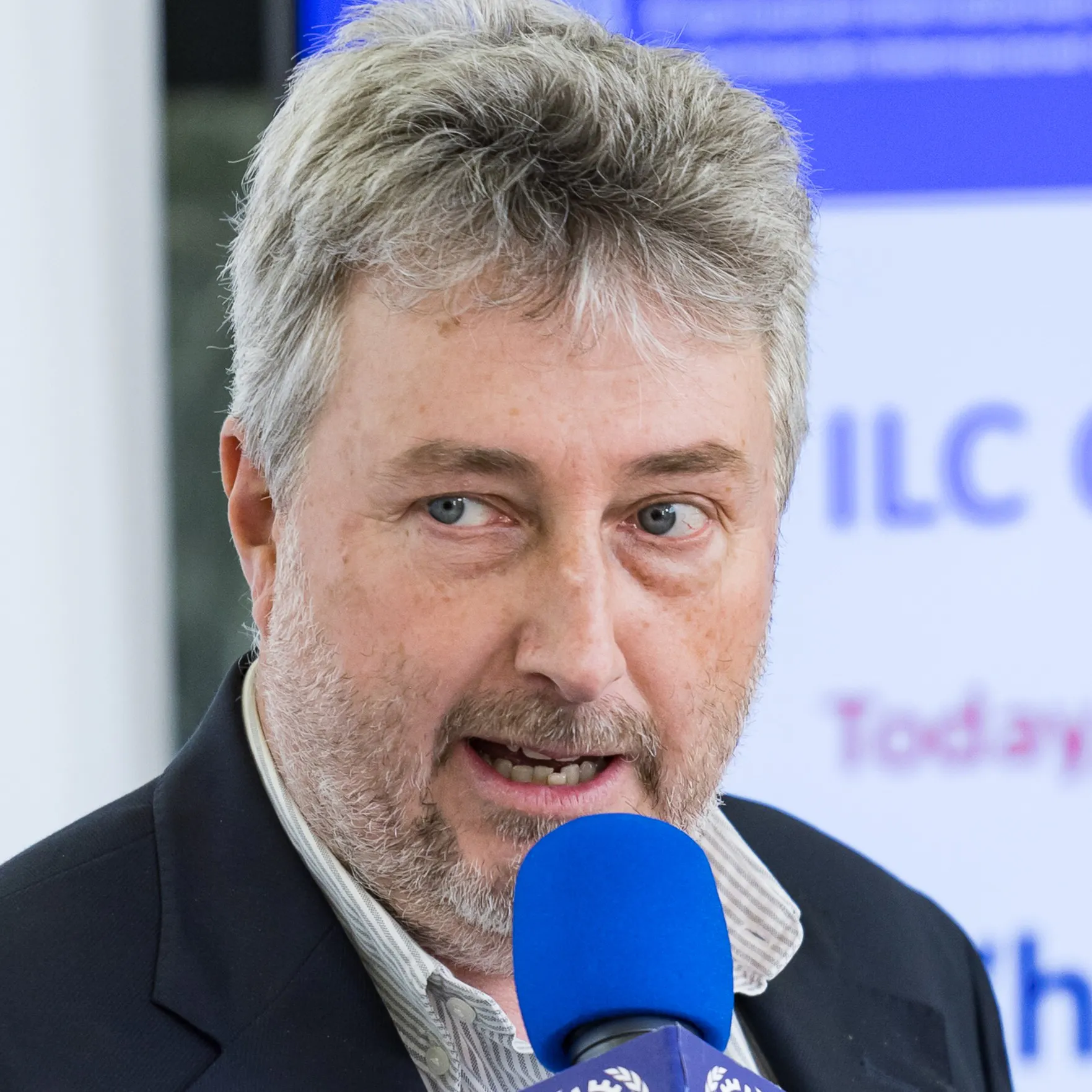
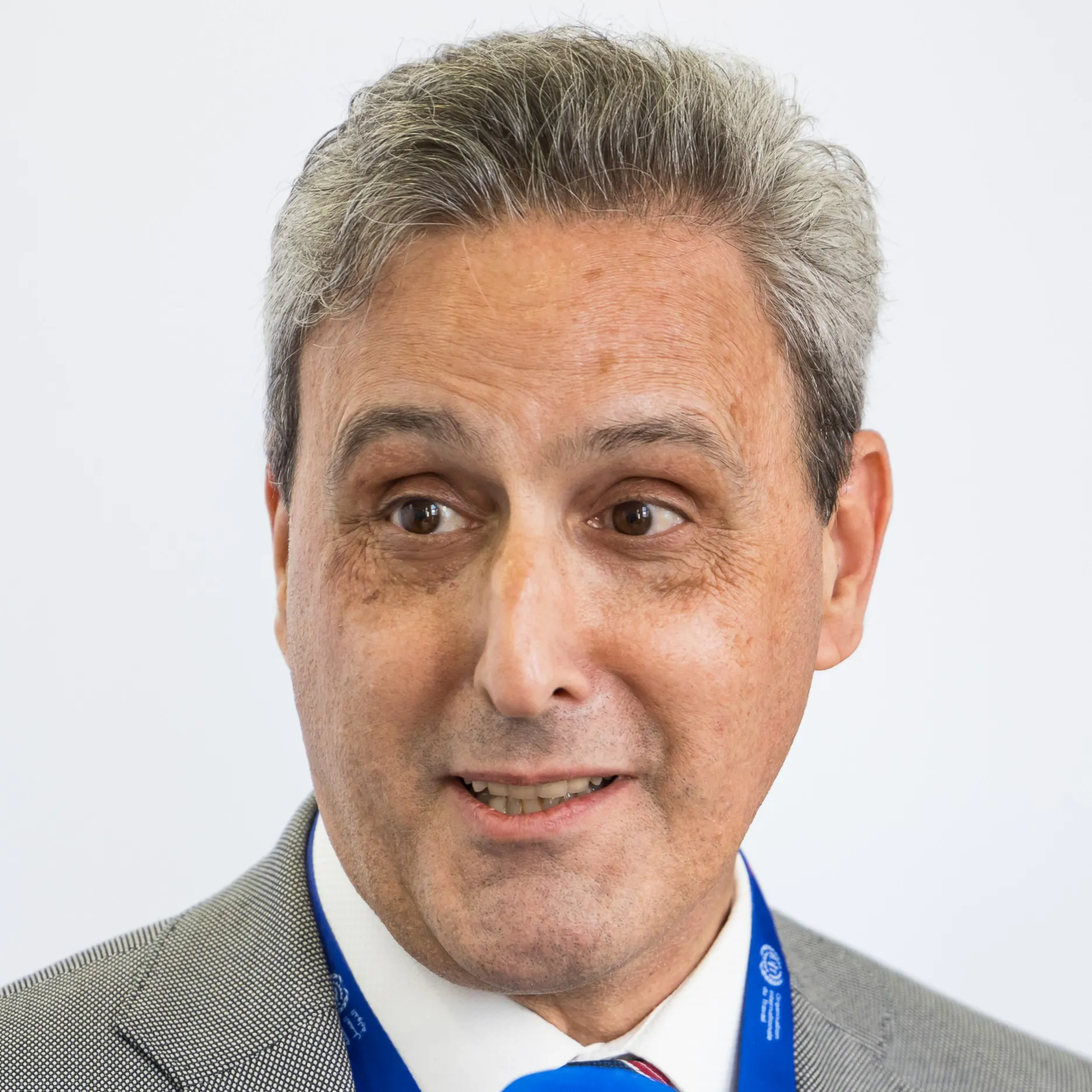
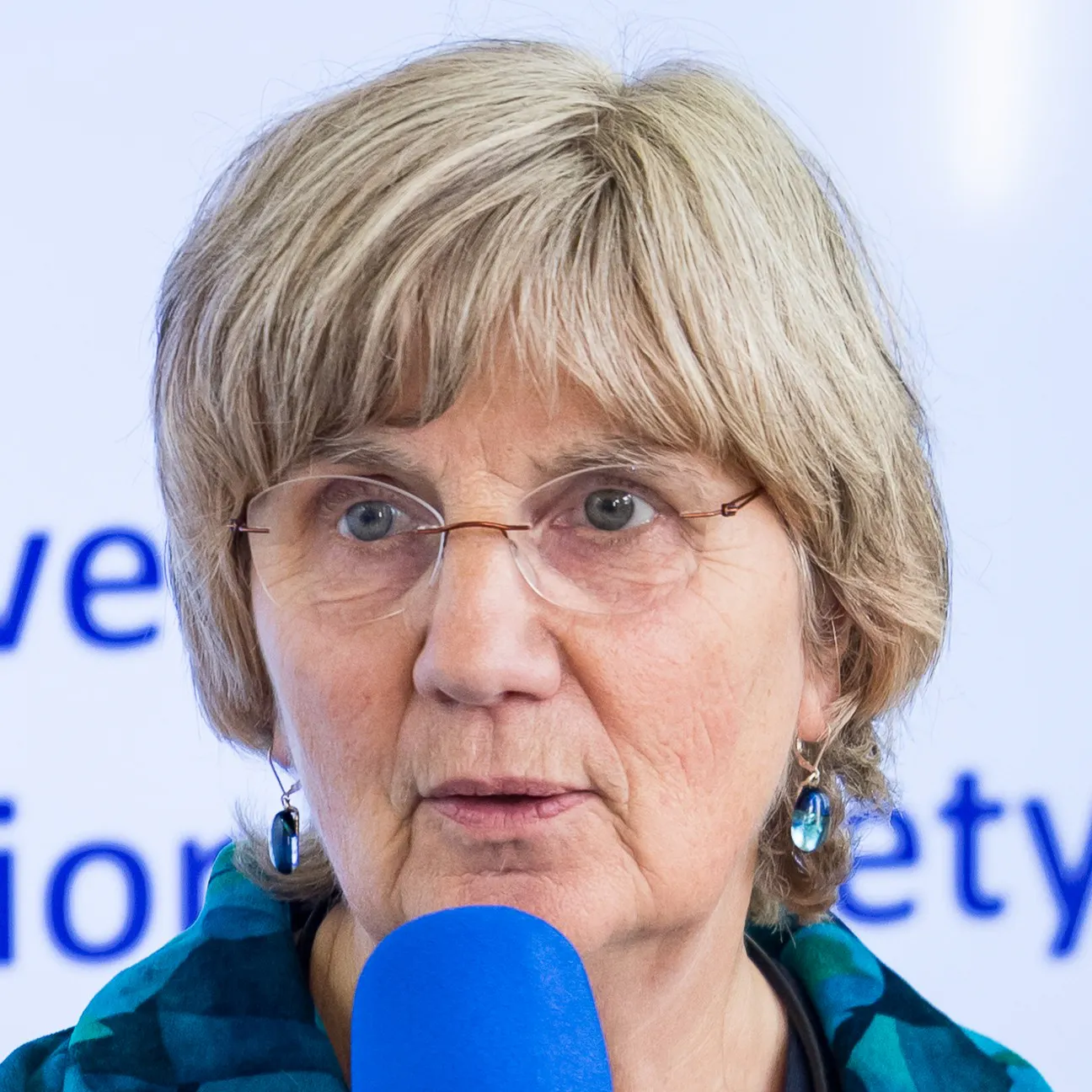
prevention can keep up with all these risks that we've mentioned so far? And how can governments, employers, workers' organizations and the international community continue to work together to strengthen a culture of prevention? Well, to help us explore these questions, we have a fantastic panel with us today that I'm very happy to introduce. I'll start with Ms Catelene Passchier, who is the Chairperson of the Workers' Group here at the ILO. Kristiaan de Meester, representing the Employers' Group, also here at the ILO. Joaquim Nunes Pintado, who is the Branch Chief of Occupational Safety and Health
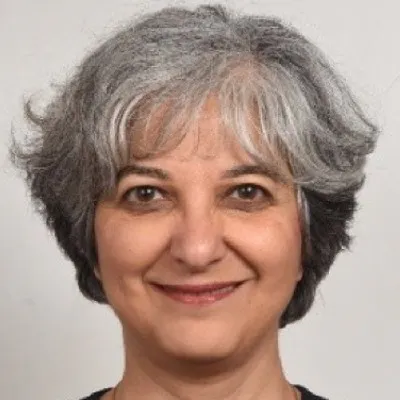
and Working Environment for us at the ILO. And of course, Ms Anousheh Karvar, who is the representative of the Government of France to the ILO and the G7-G20 Labour and Employment track, as well as the Chairperson of the Governing Body. Thank you so much for being with us today, and it's a real pleasure to welcome you. Perhaps I can start with you, Joaquim, our very own from the ILO. If you look at Convention No. 187, it does place prevention at the centre of national OSH systems, policies and programmes. So when you look back at the last 20 years, what would you say are the most important achievements
so far of this Convention and how has it been able to strengthen a culture of prevention? So I start by saying that if you look back 20 years ago when the Convention was adopted, when we thought of safety and health at work, we thought mostly of compliance. It was something that we needed to comply with. Things have changed and now we know that prevention is a smart investment – a smart investment in workers, in workplaces and also in resilient societies. And this was very much demonstrated by the COVID-19 pandemic that really reinforced the idea that prevention is really an
asset that strengthens performance, competitiveness and social well-being. I would say that the most important element of Convention No. 187 was the fact that it introduced the idea, at least in the ILO's normative framework, that in order to be effective we need to deal with prevention in a systemic way. And it's this idea of a systems approach that Convention No. 187 introduced and that we now see as being a reality in most of our Member States.
So the idea is that you need to act on different fronts in terms of national policy, having a national strategy which should be founded on evidence. You need to have effective tripartite bodies at national level to formulate policies and strategies. You need to have bilateral collaboration at workplace level. You need to have good legislation. You need to have effective and well-resourced labour inspectorates. So that was the main idea that Convention No. 187 brought forward.
I'd also say that when you look back 20 years ago, now we have more evidence. So we have more evidence on how many accidents are happening, how many diseases there are, and we have better estimates. But at the same time, I also have to say that this is probably the most difficult challenge that we still have in many Member States, which is really problematic because without evidence you cannot have the best policies and
strategies and different sorts of interventions. And of course, no discussion would be complete without mentioning the fact that a safe and healthy working environment became a Fundamental Principle and Right at Work back in 2022, and this was really a landmark decision. So confirming that safety and health at work is a human right and that no workers should be left behind when it comes to prevention. Absolutely. You raised some very important points: the importance of evidence to inform national
approaches and good legislation. Perhaps I can turn to you now, Anousheh, to look at it from the perspective of a national government. When you look at the progress that France has made in improving occupational safety and health, what is your takeaway? How has it been able to improve and what can we learn from its experience? First, let me thank you for the invitation. Occupational safety and health is a major priority in France, especially since we ratified ILO Convention No. 155, which was
missing from our 10 core standards, last year. In fact, our Minister of Labour and Solidarity, who will be chairing the G7 Labour and Employment meeting here in Geneva next Tuesday, personally came here in February to deposit the instrument of ratification. So this is the first landmark. In France, OSH measures are implemented through multi-year plans. These plans are developed
through joint collaboration between the State, the social security system, prevention organisms and social partners. The objective is to improve safety, health and working conditions for everyone. To answer your question more precisely, the previous plan succeeded in many areas. New laws, like the 2021 Occupational Health Law, are now fully in place, with most workforce health services certified.
Better training for young workers and employees on OSH, including new school programmes and a prevention passport, has been implemented. A stronger focus has been made on major risks such as road accidents at work, with partnerships to promote safety in high-risk industries. Improved dialogue between employers and employees on working conditions, with agreements in sectors like temporary work or cleaning, are also to be mentioned.
There is also a public awareness campaign to prevent serious and fatal workplace accidents. And also, as you know, there are new challenges that should be addressed, like climate impacts on workers, digital transformations and emerging health risks, which we are going to talk about later on, I think. Now, as we speak, France is launching a new occupational multi-year plan for 2026–2030, building on the progress of previous plans.
Tomorrow, I think, our Minister of Labour and Solidarity will participate in a specific meeting of the National Council for Working Conditions Orientation to launch this 2026–2030 plan. He has already announced that the new occupational health plan for this period of time would focus on the decrease of workplace accidents – this is where we must make progress still, alot – the prioritization of
primary prevention of occupational hazards at the heart of the country's occupational health policy, with strengthened national governance in coordination with local plans, and also the integration of occupational health, population health and environmental health policies. They should be articulated. And finally, a significant focus on occupational risks linked to climate change and digital transformation.
This plan, which is the result of collaboration, projects between the State, the social security system, all prevention organisms and the social partners, is therefore fully compliant with Convention No. 187. Thank you. When I listen to you, I hear national commitment and I hear tripartite dialogue between the different parties, namely in this case government, employers and workers.
So I'd like to turn to you, Kristiaan, to hear from your perspective, from the perspective of employers, what does effective prevention actually look like in practice and what needs to happen in order for us to build healthier workplaces? Maybe allow me to say that for me, the celebration is not 20 years, it's 23 years. It was in 2003 that we jointly – workers, employers and governments – had a discussion that led to joint conclusions that later became the foundation of Convention No. 187. And it was in those discussions – and
that doesn't happen often – that we put aside the Office text completely and that we drafted together a new piece of text that had the preventative culture, or culture of prevention, which we defined jointly, and that for me is still the foundation of what we are talking about. So for me, a culture of prevention, a preventative culture and successful occupational safety and health management for me that means that you see this culture, you feel it, that it is actually present in workplaces. And that means it's not about how many
inspections you do. It's not about how many pieces of risk assessment that you have. It's not about how many safety meetings that you do. It's about actual results: that what you identify is dealt with, measures are taken, people are protected and we prevent accidents and diseases from happening. Success for me also means it's not a standalone thing. Health and safety is not an extra layer that you put on top of work. It should be an integral part of work.
There is only one way of good-quality work that is at the same time safe work. For me, success also means it's a continuous effort. It's never done. The work is never over. Culture of prevention never sleeps. Success also means, for me, look at all the hazards and even look beyond the hazards. Also look at situations that maybe in itself are not hazardous but could become a hazard, or a combination of factors. Even look at comfort.
Comfort as such – for example room temperature – is not a hazard as such, but if people feel uncomfortable they will maybe not demonstrate the safe behaviour that we expect from them. So look at it from all angles. All angles for me also means making sure this is about collaboration at workplace level. This is making sure you have all the diverse angles: from the workers themselves, from the supervisors, from the experts, maybe
from the inspection that is also supposed to be supportive, but also even information coming from clients, from visitors and, why not, competitors. We have good examples of external auditing done by a competitor because they look at it with a fresh pair of glasses. And then success also for me means lead by example. And that's an obvious one, but for me that goes for everybody, from the top of the hierarchy to the actual worker. Lead by example, each of course at their own level. And lastly, successful means for me also extending
occupational safety and health to others – to your supply chain, to your contractor chain, to your clients, etc., etc. Thank you very much. Catelene, listening in, what are your reflections? And from a workers' perspective, what would you say are the areas where we made the most progress and where we still need to do some work? First, I join Kris to congratulate all of us, and especially the Office, for us all adopting Convention No. 187. Let me say that for us the greatest
advance in recent years was elevating occupational safety and health to a fundamental right. In our view it should have been there from the very beginning, and the ILO has worked on that from its very foundation. I also want to say that we have two core Conventions, Convention No. 155 and Convention No. 187. For us, Convention No. 155 is the basis of all the rights in occupational safety and health. Convention No. 187 adds the importance of prevention and other matters. Together they are the body of
core labour standards when it comes to occupational safety and health. And the fact that we elevated it to a fundamental right has helped ratification, with the example of France. Quite a number of countries have understood the message and have worked very hard to ratify either one or the other, or both. One thing that's also been important in recent years is that we have a Standards Review Mechanism, which is a very unsexy name for something that's important because the ILO has
developed standards over more than 100 years. And this mechanism reviews, in a tripartite manner, old standards to see if they're still relevant or if they need to be updated, and also identifies gaps. And we have now a quite solid OSH agenda for the next few years, starting recently with a new Convention on biological hazards. But we will also have debates on chemical hazards, where we do have instruments but they are not sufficiently up to date, on ergonomics, which is a new issue for the ILO,
but also manual handling, which I think is a very old issue but needs to be also updated to 2026. Because we have both traditional hazards, including something like excessive working hours, to name one thing, and we have very new challenges. Important for us, the recognition also in Convention No. 187 that there cannot be prevention and real protection when you don't see workers, employers and governments working together.
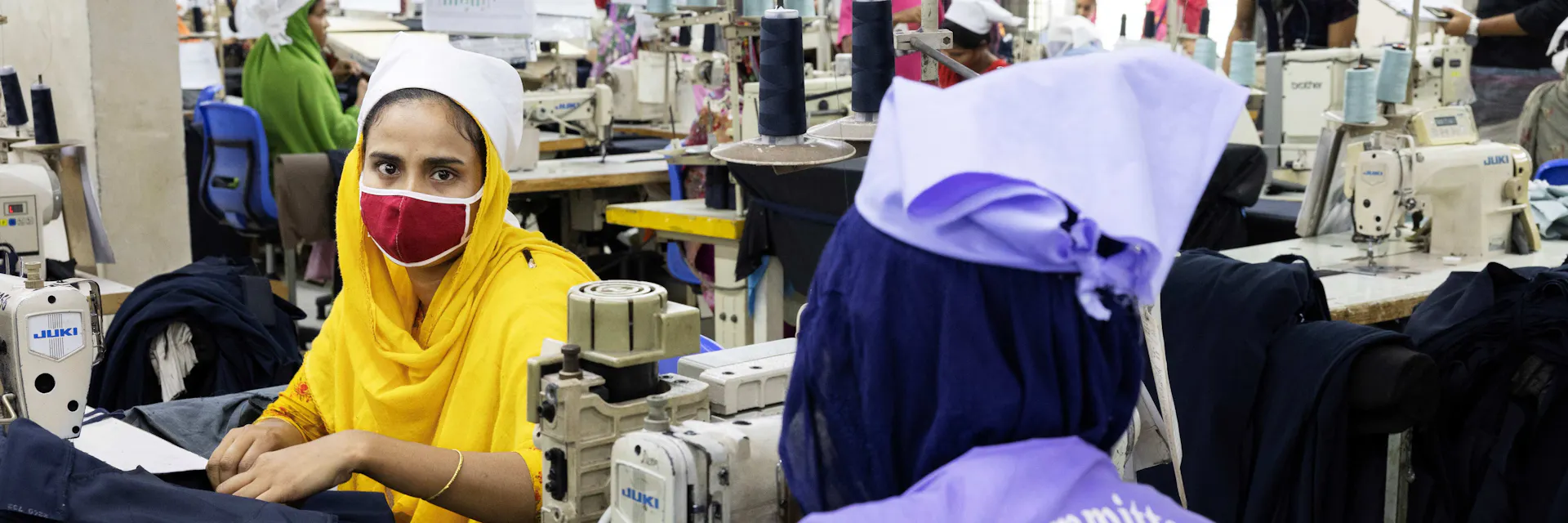
Workers especially need to be solidly involved. Let me just mention the Rana Plaza tragedy, where workers in the factories had been warning their management and supervisors that the workplace was extremely unsafe and nobody listened. And then the factory fell down with all the results, and who was suffering most? Of course, the workers. So we must acknowledge that workers have extremely
good knowledge of what's happening around them, and they can give you the right information, and they need to be listened to and also involved in how to address the challenges. Let me use what little I've left of my time to say that the issue of how to cover all workers is an essential challenge that has still not been sufficiently addressed. Kris mentioned, from the employers' perspective, how to extend commitment to subcontractors and others. We have seen countries where they have included
self-employed and agency workers on the work floor, even if they're not the employee of a certain employer or business. They are working in your working environment and you must make sure they don't die because they somehow work for you. This issue of how to cover all relevant workers, including also in the informal economy, I think is a major challenge that still has not been sufficiently addressed. Ultimately, in our view, the culture of prevention is just not only about standards, policies and paper.
And again, it is really about making workers part of identifying the problem and then also part of the solution. Thank you. Yes, we have accomplished a lot, but we do have quite a bit of work left for us as we look ahead, whether it's inclusion of all workers or the emerging risks. So if I could come back to you, Joaquim, as we look ahead, what do you think are the trends that will most likely shape the future of occupational safety and health, and how do you think we can best address those challenges and close gaps in accessibility, coverage and prevention?
So there is a core concept when we speak about safety and health at work, which Kris mentioned, which is the concept of prevention. So you need to act very early on whenever you're introducing a new machine into a workplace or selecting a chemical substance. So you need to identify the possible hazards that are coming with that machine, with that substance, and then assess the specific risks that workers can be exposed to. So this is something that we need to continue doing because
the pace of change is quite fast now. We are having not only new machinery and thousands of chemical substances being introduced in the market every year, but also new forms of robots and cobots and AI and digitalization and different forms of work. So now prevention needs to also go a step further, and I think that we are starting to speak more about anticipation. So you need, as far as possible,
to anticipate what's coming. So what are the possible implications of a novel technology that is being developed? Because this is the most effective way of dealing with prevention. Then, when we have to select the most recurrent challenges or the most serious challenges that we have in the world of work today – and Anousheh mentioned this and I think Catelene as well – we have to, of course, think about climate change and weather. And by the way, just a month ago we had a Meeting
of Experts that adopted some conclusions on the OSH implications of extreme weather events and changing weather patterns, now to be validated by the Governing Body in November. But we are speaking here about extreme heat, air pollution, heavy precipitation, floods, wildfires, with devastating consequences for the health of workers. And again, governments and social partners need to define policies that also go beyond OSH policies. They need to look into environmental policies, emergency preparedness, etc.
Then the question of technology that I already mentioned, this is obvious. But also something quite important is all that relates to demographic change because we are seeing that in some regions of the world, like Europe, we have an older population. And this comes with all sorts of hazards related to back pain and different sorts of diseases. And then we have regions of the world that have a very young population, which also comes with a whole different set of challenges. So this is also something that OSH interventions
at national level need to look into. The fact that we need to address the specificities of the workforce of each country and, of course, different sectors, different groups of workers and different vulnerabilities. And once again, also this idea of anticipating. So what will be my workforce, my demographics, in 20 years, and how can I prepare for that? Just my final word. Let me go back to the idea of systems that is promoted by Convention No. 187. So I would say that, at the end,
the future of prevention is about building systems that can continue to learn, to adapt, to improve. And of course, for that we need tripartite commitment from all the parties. Indeed, anticipation is key. I mean, how do you actually figure out a way to anticipate? So going back to the experience of France, or anchoring the experience of France, Anousheh, how do you think countries can actually better anticipate the risks that are coming up and adopt their national policies
in time to be able to respond effectively? Well, from France's perspective, addressing these interconnected challenges of climate hazards, psychological risks and technological change – and I was happy you added also the ageing population – requires for us a proactive, integrated and adaptive approach in national policies and institutions. France is working to anticipate and respond effectively,
first by strengthening risk anticipation. For that we have prioritized early detection of emerging risks, and we have for that some national institutes, for example the National Research Institute on Safety. We also have the French Agency for Food, Environmental and Occupational Health and Safety. These two agencies monitor trends in workplace hazards, climate impacts and digital transformations.
We also have a multi-stakeholder dialogue. As I said, our National Council for Occupational Health, Safety and Working Conditions brings together government, social partners, but also experts to identify priorities such as mental health, for example right now, and also climate-related risks. We also count on international cooperation. As a member of the ILO, France aligns its policies with global standards
such as the two core Conventions, Convention No. 155 and Convention No. 187. But we also promote and share best practices, like this G7 social initiative that has been taken, for example the Vision Zero Fund. I never have it in the right order! The Vision Zero Fund, which was initiated in 2015 by the German Presidency of G7 and has been
updated in 2022 to take into account climate change hazards in workplaces. And this was about strengthening risk anticipation. There is also something to do about integrating our policy frameworks. So I talked about the multi-year plan, but also creating some kind of coherence between different health policies. We have climate and labour.
We also have major work on new regulation to address heat stress, but also air quality and green transitions in industries. We have a specific law that is called Climate and Resilience, and it includes measures to protect workers from extreme weather and reinforces employers' obligations regarding heat-related risk prevention. It introduces new provisions into the Labour Code regarding risk prevention measures implemented by
employers in response to intense heatwaves. We also have some colour levels of risk, like everywhere – yellow, orange, red – which are implemented by our Météo-France national heatwave alert system, which identifies for each département, and is based on local analysis, the occurrence of intense heatwaves. We also work on psychosocial risks.
Since mental health was declared a national priority for us for 2025–2026, France is rolling out toolkits for SMEs, training managers and integrating this psychosocial risk prevention into collective bargaining agreements. And on digital transformation, the France 2030 investment plan funds reskilling programmes and studies on AI impacts on
labour, while the labour inspectorate monitors algorithmic management risks. This is a new mission given to our inspectors. And third, thanks to adaptive institutions, we are working with local and regional occupational health services to tailor responses to local needs, for outdoor workers for example in southern France. We also try to advocate for flexible governance of all our specific institutions.
And we are also promoting public-private partnership collaboration, for example with insurance bodies and sectoral organizations like those in transport and construction, to target high-risk groups like gig workers or temporary agency workers. And last but not least, we are focusing on vulnerable groups, protecting young workers with reinforced training and supervision for apprentices,
or addressing gender-specific risks, for example for women, combating workplace harassment. It is part of OSH also. So, to put it in a nutshell, France's strategy tries at least to combine foresight, collaboration and agility to address current and future challenges for companies and workers. It's a multi-layered approach. Yes. With many actors. But of course the first people to feel the heat, pardon the pun, are the workers.
So if I can turn to you, Catelene, from your perspective, since workers are the first to really experience a lot of what we're talking about in the workplace, what are the most salient or important risks that you, from a workers' perspective, are concerned about when it comes to OSH as we move forward, as we look ahead? Well, talking about multi-layered challenges, first of all, when I was a young student, which is very long ago, I studied working time legislation. Working time is one of the oldest and still most
relevant challenges in the area of protection of workers against safety and health hazards. So many workers in the world have excessive working hours. And those with excessive working hours are very often the vulnerable ones. Because one risk that we also see is an increasing gap between the elite – and I don't blame them for being well-protected workers with proper labour contracts, good employers, being well protected – and an increasing mass of workers that is not protected,
in some kind of precarious form of work, agency work, so-called self-employment, migrant workers. Let me just mention the example of Qatar and other Gulf States where we build football stadiums with workers making very long hours under extreme heat. And the issue of heat stress and how to deal with it – and I think it was very relevant to have this Meeting of Experts – but it is hitting the most vulnerable workers. So the issue of how to make sure that all the
protection that we afford is also reaching all workers is one of the major challenges. This Conference we discussed platform workers, which is a new area, I think, of awareness-raising, that to protect platform workers has also to include OSH risks. Ergonomics, I mentioned, we are dealing with in the future, but many workers nowadays have a lot of problems in their systems because of sitting too long.
Call centre workers, just to name one of them. Anousheh mentioned violence and harassment in the workplace, not just hitting women, but I do think that the gender dimension of OSH has not been sufficiently addressed. And reproductive health is one issue that is not only relevant for women but also for men. Let me just mention, in my country there were studies showing that truck drivers had major problems because of sitting too long, many of them men, with their reproductive health. So those issues, new and emerging risks,
need to be addressed. I want to emphasize that our fundamental rights have a strong link with each other. Without freedom of association and collective bargaining rights, without workers feeling free and being free to speak up about risks that they encounter and doing something about it, OSH will not be sufficiently addressed, especially in the cases I'm mentioning. So we must always have an integrated approach to the various Fundamental Principles and Rights at Work and indeed include workers in all the
policies we develop. Thank you. Kristiaan, this really has set a scene where enterprises really have so many risks that they need to be thinking about, adapting, evolving and adapting to, and working towards prevention. So from your perspective, how can that happen? Yeah, first of all, maybe it's important to underline that we have to bear in mind that there is a difference between the macro level, what we discuss as policymakers, and the actual reality in the workplace.
And for example, the fast pace that Joaquim referred to, or emerging risks. In reality, of course, we see new technology, but in reality in most companies this is a very slow evolution. Once you have invested in machinery, equipment or technology, it is there to stay for at least 10 or 15 years until it's fully paid off. So that is a mistake we should not make, thinking that everybody's suddenly jumping to a new level. For example, next year if you discuss chemicals, once you decide on a certain
chemical process to develop materials, it will be there for 30 or 40 years. Even if next year there is better technology, that technology, that choice, will be there for 30 to 40 years. So that is something we have to bear in mind. Now back to your question and the solution, or the approach. And I tend to focus on, as I said in my first answer, the solutions. Each of the challenges mentioned here – psychosocial risks, ergonomics – we could discuss for hours. But I focus on what
would be a good way to approach it. And some of the elements were already mentioned, like adaptive risk assessment. Risk assessment, as I said, it's not something that you have, it's not a piece of paper, you do it and it's in a drawer. Every day risk assessment is needed. For example, a mobile construction site, or any construction site, the circumstances change. Even during the day, the circumstances change because a hole that was not there in the morning could be there in the afternoon.
So adaptive risk assessment is more than paper. Secondly, learning networks. We encourage our member companies to be part of as many learning networks as possible. That could be peers, that could be expert networks, that could be competitors. Learn, pick up good practices and turn them into your own best practice. The attitude, as I said, every day is a new day and a new challenge to perform better.
Turning the invisible into the visible. So many of the hazards that we face, or that we have to face, are not always visible. And the discussion next year on chemicals is an example where if the chemical is in a barrel, or a container, or a tank, everybody notices. And if you understand the symbols on it, you notice. But when the chemical is in the air, on the soil, on material, it's invisible. So we need technology to make the invisible hazard
visible because if you don't know, you cannot act. And there AI, I think AI and other digital technologies can help us protect workers without exposing the workers themselves. In the past we needed to send somebody into a confined space to measure, and that person gets unwell, and the safeguard has to go in also and also gets unwell. So now we have the technology to prevent that. And then, this is for me an important one because I'm also a hobby photographer. I always say we need to have,
in occupational safety and health, a photographer's eye for risks and hazards. That means looking at every detail, seeing things that others don't see, but at the same time always also seeing the frame, the total picture. So pick up the details, but never lose sight of the total picture. That kind of attitude is something we need. Many workers and managers go to their workplace every day and they don't see the obvious hazards anymore. And that's why this photographer's eye, that attitude, is so important. So I think these, for me, are the key elements.
And of course all of this has to be done in a collaborative way. If workers cannot speak up, or are afraid to speak up, you cannot learn from situations that in the future might trigger an accident or an incident. So creating a culture of prevention means also making sure the company, or the organization, is open to whatever suggestion or comment. And also here anonymous tools, digital tools, can help. A photo can be sent to your prevention officer without the officer needing to know who took that
picture, where it comes from. Act upon what you see. Act upon information that you get. Thank you. I just want to say, because we are in an ILO context, yes, without labour inspection, and labour inspection that is sufficiently resourced, a lot of our good plans will not work. So it's not just the workers and the employers. Governments have to resource labour inspection. We have major instruments in the ILO on that key issue. Thank you very much. Important point. Absolutely.
So now we have to wrap up, and we could probably go on for much longer. But thank you very much. That was a very interesting conversation, and thank you again to the panel. In the meantime, you can always follow us on social media. We are on @ILO on X, Facebook as International Labour Organization, LinkedIn as International Labour Organization, Instagram as @ilo. You can find us on YouTube. We've got our own channel, ILO TV. And until the next time, take care and goodbye from us.