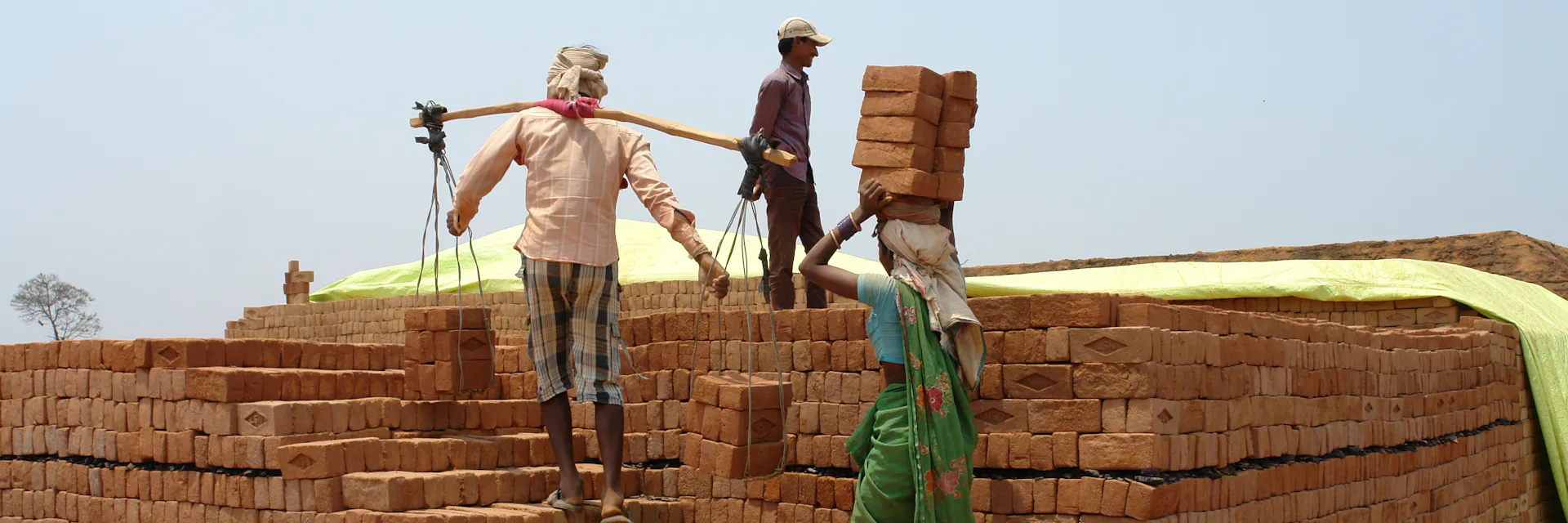
Forced Labour
Who’s making money from forced labour?
Episode 55 | 30 April 2024
Forced labour is usually spoken of as a brutal abuse of fundamental human rights. It is less often understood as an economic problem that feeds crime, helps to perpetuate poverty, and damages legitimate businesses.
A new report from the ILO throws light on this aspect of forced labour. Profits and Poverty: The economics of forced labour, focuses on the private sector profits generated by forced labour. It estimates these illegal profits at 236 billion US dollars, an amount that has increased by more than a third (37 per cent) in the last decade, the result of both a growth in the number of victims of forced labour as well as the increasing profits generated by their exploitation – around 28 million people are estimated to be in forced labour at any one time.
Michaëlle De Cock, head of the research unit of the ILO’s Fundamental Principles Department, and Anousheh Karvar, the French government delegate to the ILO join the podcast to discuss what can be done by governments and businesses to combat this crime.
Find out more
- Profits and Poverty: The Economics of Forced Labour — ILO report
- Annual profits from forced labour amount to US$ 236 billion, ILO report finds — Press release
- Forced labour, moden slavery and human trafficking — ILO topic portal
- France - ILO Partnership — Partnerships
- Alliance 8.7 — Multilateral initiative
- ILO Global Coalition for Social Justice — Multilateral initiative
Featuring
Guests


Host