-Hello, and welcome back to the ILO's Future of Work podcast. I'm Sophy Fisher. For many people, having your own business is a dream. It can be a route to independence, to managing your own time, and making your own decisions. It can also be a way out of poverty, particularly when formal jobs are scarce. Being an entrepreneur isn't easy. Having a good idea and turning it into a successful business are very different things, and many micro and small businesses fail.
However, training can help, and one of the ILO's most successful programs is designed to do just that. It's SIYB, or Start and Improve Your Business. Since it began in 1977, around 28 million people worldwide have been trained, including 12 million women. Joining me today to talk about SIYB are Luisa Iachan, who is an ILO expert responsible for inclusive markets and promoting entrepreneurship,
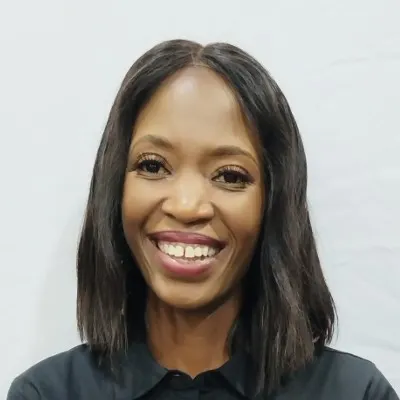
and Ngoakwana Seleka an SIYB graduate and an entrepreneur from South Africa. Welcome to you both, and thanks for joining us. -Thanks, Sophy. I'm really happy to be here today and chat with you about this super important initiative of ILO. -Luisa, tell me, first of all, what is it that makes SIYB different and, of course, successful? What is going on here? -Thanks, Sophy. SIYB is an entrepreneurship training program, like you said, developed by the ILO to support potential
and existing entrepreneurs in the creation and management of small businesses. It targets entrepreneurs at different stages of business development from the generate and start your business models, which target potential entrepreneurs, to the improve and expand your business models, which are targeting already existing businesses. As you said, SIYB has been widely used in the world.
It has been used in more than 100 countries already. This large scale dissemination of the program was favored by its implementation model in three tiers. -What makes it different? Why is it successful where other schemes are not? -In my opinion, the success of SIYB is attributed to three main aspects of the programme. The first aspect is the quality of the methodology and the practical nature of the training workshops.
The program offers well-structured training models that cover all the essential aspects of running a business, from planning and setting up to financial management and marketing. The trainings are conducted in a very practical and interactive manner, using real-life examples that are applicable to concrete business scenarios. The second aspect is the flexibility of the materials. One of the strengths of SIYB is that it is designed to be adaptable to various contexts,
allowing for flexible implementation in different countries and regions. The third aspect is the strength of the network of trainers. SIYB has more than 500 master trainers in the world and 55,000 certified trainers in more than 100 countries. This international network promotes knowledge-sharing and ensures high quality
and contextualized dissemination of the training methodology. -Fantastic. Ngoakwana, you're an entrepreneur now. I want to bring you in and I'm going to ask you in a minute about your experience with SIYB. First of all, I'd like to ask you, why did you want to become an entrepreneur? Because it's a tough career. -Let me start by saying thank you, Sophy, for having me and for this opportunity. The reason I started or I wanted to be an entrepreneur is that
growing up, my mum was a businesswoman so I learned from her. From an early age, I was involved in the business. I would sell some of the bakes she does at school. I can say it's in my blood. I got the interest from my Mum. -Tell us about your business now. Actually, I think I should say businesses, shouldn't I? Because you've got more than one. -Yes. I'm into food and beverage.
I do catering. I've got a small shop at my town where I'm selling bunny chows. I'm doing also baking scones and biscuits. I've also got a ginger juice under my brand. I've also got catering company, which I do for corporate, private and public. I've frequently ventured into livestock farming. -Livestock farming? That's pretty different. -Yes.
-What kind of livestock farming? -I started with goats because I've seen that most people nowadays, they need goat's meat and also goat's milk. -Do you do all this yourself or are you employing people too? -We've got people that I've employed. Now, I'm not at my shop, but it's operating, it's open. I can't do it alone. -How many jobs have you created? -I've got two permanent ones. Then I've got three ladies, which are temporary.
-For you, what were the best bits of SIYB training? What do you think it did for you? -It helped me to manage my finances. What stood out for me, it was the record keeping because before I joined the training, I was just doing business as usual. I was not recording. After the training, I started to record everything, the money in, the money out. The material, it was very useful.
You can still use it while you are busy on a daily basis on your business. The record keeping, it also helped me to identify an activity in my business that was not bringing in money, that was actually taking money from other businesses. Through that, I had to cut out that activity. Now I can see which one is doing well, which one is not doing well. Where do I need to improve? Which expenses do I need to cut off? -Wow.
Luisa, is that the kind of results that you would hope to hear from an SIYB graduate? -Yes, exactly. It is very impressive and congrats for your work as an entrepreneur. We do expect entrepreneurs to learn skills that are essential to running their business effectively and productively so that this increases their chances of long term success and creating decent work for their communities.
-Yes, because she's creating jobs as well as employing herself, huh? -Exactly. In the world, we have estimated that so far with SIYB, more than 10 million jobs have been directly created. This is really something that can help reduce unemployment and improve local economic conditions. -One of the things that she said that stuck out for me was that the SIYB training allowed her to see which bits of the business were actually just sucking up cash
and which bits were actually making the profit, which weren't necessarily what you might have thought. Is that the classic sort of revelation that the techniques can give? -Sure. Yes, that is definitely something that SIYB and entrepreneurship training can help entrepreneurs notice and help them improve in their business. -Now, one thing I'd like to know is how do you include… --
A lot of the people who could perhaps potentially benefit most from starting their own businesses will be marginalized communities, people who find it difficult to find formal sector jobs, for example, young people, women such as Ngoakwana or indigenous communities and so forth. How do you target them? Is that possible? -Yes, that is a crucial question. These are groups who are frequently excluded from the labour force and who have more difficulty finding formal work opportunities.
For these groups, entrepreneurship is often an alternative economic pathway to formal opportunities. SIYB actually places a very strong emphasis on inclusiveness to ensure that the materials are accessible to individuals from diverse backgrounds, including women, youth and marginalized communities. Actually, some aspects of the programme make it particularly relevant for marginalized groups
like the educational content of the programme that provides often concrete examples and case studies that reflect specific realities and challenges that these groups face. Depending on the context, we also develop specific resources and tools that help addressing the particular needs of these groups. For instance, we have the SIYB level one,
which was developed to train individuals with low levels of literacy. We also have specific tools that have been tested to meet the needs of women and young entrepreneurs and to help them overcome specific obstacles like limited access to funding or lack of professional network. -Now, one of the thing you touched on there was the changing environment. One of the things that business people will tell you is that they have to be very sensitive to business conditions changing.
Then of course, you have new things developing gig work, platform economy, so forth. Are you developing new modules for SIYB to keep up to-date with all these changes in the business world? -Yes. To ensure SIYB remains relevant, we continuously update materials and develop new relevant models. We do monitor emerging business trends and challenges, and we develop new training to help entrepreneurs with the emerging business trends.
For instance, in 2018, the programme introduced the green business booklet, which helps entrepreneurs to adopt environmental friendly business practices. In 2020, we developed eLearning models to facilitate online learning for participants during the pandemic. In 2022, we developed the digitalizer business that help entrepreneurs with benefiting
from the wide dissemination of digital technology including topics such as the E-commerce and social media marketing. -Wow. What about the plans for the future? Have you got anything in the pipeline that you can tell us about? -Yes. Besides the development of new and updated models, the ILO entrepreneurship team has also integrated SIYB as part of a broader approach to promoting entrepreneurship. One that is linked to the development of inclusive entrepreneurship ecosystems,
which combines SIYB entrepreneurship training initiatives with strengthening of other areas of the entrepreneurship ecosystem like policy, culture, markets, finance, and other support services. -Gosh. That really covers the full range, and it gives us an idea of how many skills you have to have to be a successful entrepreneur, I think. We haven't got much time left, so let me give a final word to Ngoakwana.
What advice would you give to somebody who was thinking of starting their own business? Maybe either because they wanted to be their own boss or because they were finding it hard to find a decent formal sector job. What would be your top tips? -My top tips will be you should start with what you have, you should believe in your dreams. Never give up. Know your whys, why you started that business.
Have a vision. Know where you are going, and always, always make sure that you learn everything. You learn something every day towards your business. -Do you think some of that learning is best done in a formal context such as this kind of training? -Definitely. They should take up any opportunity that come on their way. This kind of trainings they're very important.
-As Luisa touched on, there's more than one SIYB course, I think, so there's always something new to learn. I'm sure that you would find new things from Luisa and her colleagues to help you expand your business further. -Yes. I wouldn't mind to join the training again. Really. -That's a pretty good endorsement. Thank you so much for that. Thank you to you both for joining this Future of Work podcast. I'm afraid it's all we've got time for. Let me thank also our audience for their attention.
I hope you've enjoyed hearing from Luisa Iachan and Ngoakwana Seleka. I hope you'll also join us again soon for another Future of Work podcast. Meanwhile, you can always catch up with us on social media, including LinkedIn, X, and Instagram. Until the next time from me, Sophy Fisher, goodbye. [Music]