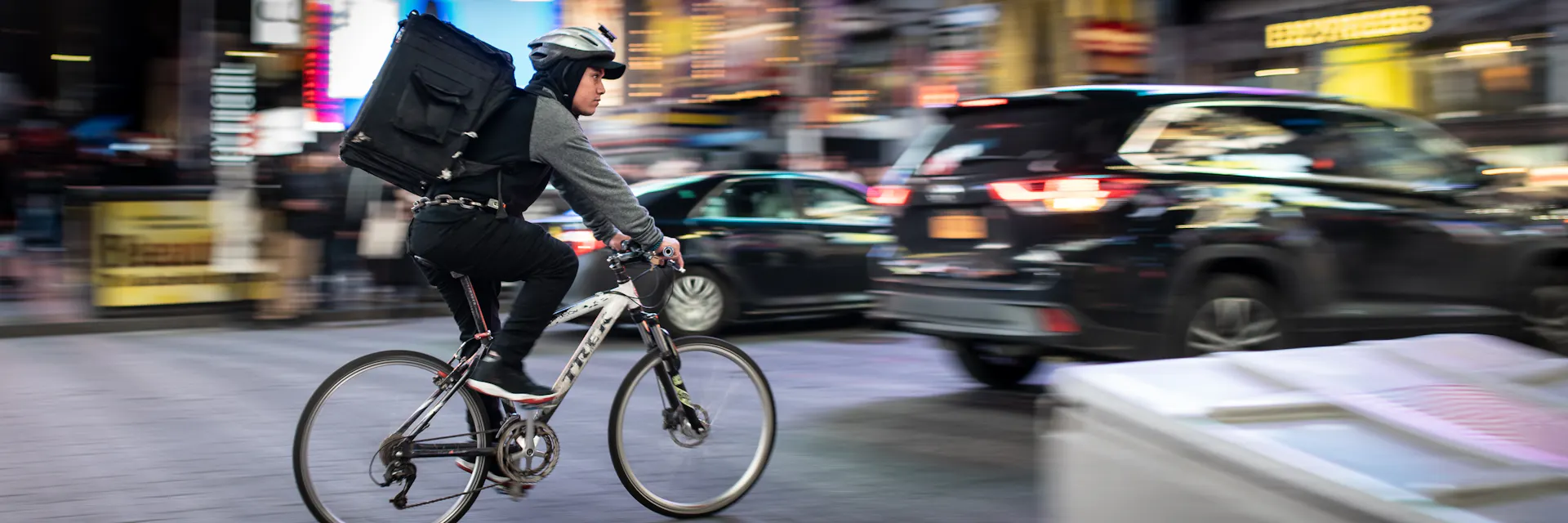
-From the International Labor Organization in Geneva, Switzerland, this is The Future of Work Podcast. I'm Anders Johnson, here to talk today about the role of digital labor platforms in transforming the world of work. Digital labor platforms have become ubiquitous and are often in the news from transportation or food delivery services through to online freelancing platforms more and more businesses and consumers rely upon them. Especially in the past year as the COVID-19 pandemic led to
lockdowns and quarantine measures. They've got a lot of names from the gig economy to digital work platforms but regardless of how you want to refer to them, they've become big business. According to the ILO's latest world employment and social outlook 2021 report, digital labor platforms are providing new work opportunities including for women, for persons with disabilities, young people, and for those marginalized in traditional labor markets.
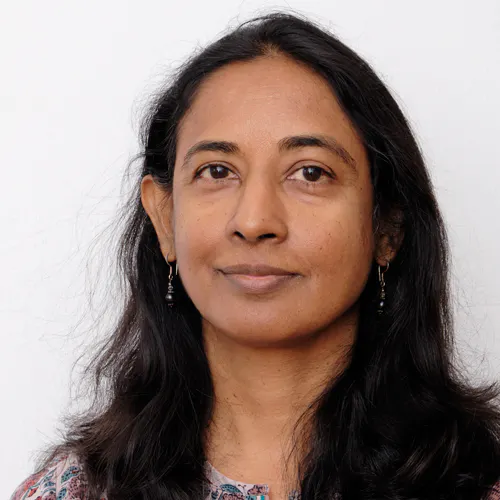
Platforms also allow businesses to access a large flexible workforce with varied skills while expanding their customer base. So far so good, but what's the reality for workers and businesses in this new work environment? To discuss this today, we'll be talking with a variety of workers from some of these platforms to hear their stories but to start us off, I'm happy to introduce the main writer of the ILO's reporter Dr. Uma Rani.
Uma, thank you for being with us today. -Hello, Anders. Good to be here with you. -To begin with, give us a little bit of context, why this subject and why now? -Digital labor platforms have increased five-fold over the past decade and there's a lot of talk about these platforms and also a talk about workers who are mediated use on these platforms. There's a big issue around how these workers are classified.
What attracted us towards this research is actually twofold. One thing is we realize that there is a lot of similarity between workers on this platform and home-based workers of the late 19th century and early 20th century, especially, in the manufacturing sector where a lot of women workers were actually doing certain tasks which are fragmented and given to them. The way a lot of these jobs were advertised then and today
is that work is available and workers can actually do it in their free time and there's also a lot of flexibility around it. We were quite interested in understanding what are the processes, how is this work being organized because much of this work, whether you're talking about taxi or delivery services or if you're talking about transcription or translation on online web-based platforms, they are not new but what is new is there is a technology
that actually mediates the services between the clients and the workers. That was one of the reasons why we got interested in this work and we decided to do a report. -What's the change that these platforms are bringing to the world of work? -The first thing is because it's technology-mediated, they have introduced algorithmic management of work processes and performance, whether it be allocation of work, monitoring of work and work processes, or evaluation and rewarding of work.
The second change that they have been bringing about which is actually quite fundamental and very important for us to realize is the way the organization of work is undergoing a change. There's a shift of responsibility with regard to both capital costs as well as the operating costs from a firm or a company to the worker. -Just to jump in, what do you mean by this? -What I mean is, if you're talking about an online worker,
he needs to have his own computer. Similarly, all the operating costs whether it is internet cost, whether it is your own living space or whether it is other expenditures that are there, have to be borne by the worker himself or herself. Similarly, when you're talking about taxi services, the taxi has to be owned by the worker, that is, a taxi driver. All the fuel and maintenance costs are actually borne
by the taxi driver. Again, it is not pushed onto the company. The third which is actually quite fundamental is this model is actually creating a highly segmented labor market with a very cool workforce who are actually employed directly by the company and they get all the benefits. Then there's a large mediated workforce that exists where the workers are typically categorized as self-employed or independent
contractors and often they do not actually receive any benefits. Now, this has a huge implication on the future of work of the workers. -We tend to assume that AI magically does things in the cloud, huge computers crunching big data and doing everything by itself, but behind those programs are workers doing the countless tasks that are involved in training these AI, and yet we rarely talk about them. What's your take on this?
-That's exactly true. Actually, we assume that a lot of work on the cloud or on the internet actually happens automatically or there's an algorithm that is there that actually does the task. Now, let me give you some examples to it. When you look at social media platforms, you often don't see pornographic images or hate speeches or war images. You assume that there's an algorithm there that actually tries to get rid
of all this material, but actually, in reality, all of this work is being done by workers who are called as content moderators, who sift through thousands of pornographic images per day and get rid of those that are not acceptable in society. Similarly, if you get on to the web and you want to order something, clothes, or certain types of books or certain types of utensils, you will find that all of that is very neatly categorized. Now, this categorization is not done often by algorithms, but
there are humans who are actually sifting through each of them and categorizing them in a category. Now, it is true that some of these tasks will be automated in future, but at the moment, there are cloud workers performing all of these tasks and training the algorithm so that it can be automated in the future. -I've heard a lot of talk in the news, it seems almost every day, about the opportunities that these digital labor platforms offer to
both workers and businesses and I've lost track of the amount of people in publications saying that this really is the future of work. In your opinion, is this the case based on what-- Because I thought there were about 12,000 respondents to your survey that the report is based on. What are the upsides but also, perhaps, some of the downsides of this? -There are opportunities with the platform work coming in. One of the reason why it's been looked up as opportunities is because
this lack of employment opportunities in a number of countries, especially in the local labor markets. You do have people with certain kinds of education, with certain kinds of skills, but are not able to find any employment opportunity in the labor market. As a transition, many of them have actually got onto the labor platforms and are trying to find work. For many others, it is also because sometimes the pay that
you get there is better than what the other available jobs are, often, which means that you do not have any employment at all. That's also one of the reasons that we did find workers saying, but the other reasons that we do find is often is because of certain care responsibilities and this was especially among women. It's also an important source for migrants, refugees, those with certain kinds of disabilities, whether mental or physical.
Having said that, there are also downsides to this kind of work and I think one of the basic downsides is the way the worker gets identified on these platforms, it's often as a self-employed or as an independent contractor, not as an employee, even if they work sometimes for the same client for a longer period of time. Now, this has repercussions as far as getting certain benefits are concerned, whether it be social security, regularity of work and
regularity of income, whether it is related to getting some paid leave or sick leave or having certain assistance if they have any sort of a work injury or occupational health hazards or anything. Many of these workers cannot even organize themselves to bargain for their rights. I think some of these issues need to be addressed if one would want platforms to become an opportunity to have gainful employment.
-We've spoken a lot about the worker perspective on this. I'm curious, what's the perspective of businesses themselves regarding online platform work? -I think for the businesses, online platform has provided them a new way of outsourcing, where they can actually access labor 24/7. It helps them to reduce cost, as work can be easily done by the global pool of labor that is easily available.
It helps them to cut costs, it helps them to access knowledge for innovation. Many of these companies are also using competitive programming platforms for recruiting workers into the companies. There is a lot of demand that has got created among businesses actually to access these workers. During the COVID-19 pandemic, we saw that many companies that were trying to cut costs were actually moving a lot of their offline
work onto the online labor market. The future seems like there is going to be a push towards a lot more online work than we saw pre-COVID-19. -Thank you, Uma. I'm now going to turn to some of those workers from these platforms. I spoke earlier with three of them and this is what they had to say. Let's have a listen. -My name is Sergio. I was born in Portugal. I am 38 years old right now.
I've been working for the past 15 years or so. I started freelancing in 2006. -Wow. Okay, that's a long time. I think you're actually the first person I've spoken to who's been working consistently on digital platforms for this long. What was your initial motivation in terms of working this way online? -Initially, when I began, I tried to find a regular kind of job, '95, with
a company, but in the place I lived, I had trouble finding work locally. I was pushed into it, was not exactly something I would have chosen. -When you ended up working on these platforms, what was your initial expectations about the kind of work? What do you think it was going to be like? -What people imagine and what I've-- A the time because there wasn't this thing about digital nomads and freelancers and being your own
boss, but it was nothing like what you see nowadays, for example, see those people working in Bali or Thailand on the beach and enjoying themselves, oh, no, no, but the job offers were just like, I often hear you saying 'a race to the bottom'. The one with the lowest bid with the quickest delivery, no matter the quality, is the one that wins and people don't see also the cost of being a freelancer, for example, people that are used to
having employees, they directly translate the costs per hour to the thing they should pay us. For example, if someone working for a company earns $10 per hour, they expect to pay the same thing, the same exact value to a freelancer, but they forget that the freelancer has to invest in their own hardware, they pay the electricity bill, the internet bill, they have to work from home so they have to have this ergonomic space.
They have to pay their own taxes, they have to account for vacation, and health insurances. There's a whole lot more involved. If a guy asks for $10 per hour, that's not $10 per hour he or she is going to get, there is the fee that other such platforms charge, which can go as much as 20%. It's hard for them to understand that of those $10, we receive 8, and I don't know, maybe half of that, maybe 40% has to go to other stuff.
That's why many freelancers, such as myself, don't have vacations. It's like taking care of a baby. When you have a baby, when he sleeps, you sleep. When we have work, we work, when we don't have work, it's rest time. You do what you have to do and that's it. -Thank you, Sergio, and please hold on to that thought because I'd like to come back to it later but first I'm going to turn to Mercy Osongo in Nairobi. Thank you for joining us, Mercy. Picking up from what I asked Sergio, what was your motivation behind
getting involved in online work? -I am 28 years old, and I have a background in communications and fundraising. Basically, that's what I've been doing for the last four years or so. My motivation for online freelancing was based on, one, at the time I was working for an organization and my mental state was not at its best. I was actually thinking about transitioning to another job.
I shared this with a friend of mine who actually recommended to start the freelancing side by side with the job that I was doing at that time to enable me to see if this is something that I would like to transition into and that's when I started freelancing two months before I quit my job. In these two months, I had a very good experience. I met my clients very fast. My online freelancing picked so fast at that time, so I thought
why not give it a go now? Why not make it full-time and leave my job at that time because I was not in my best mental state and I was also not happy with the job generally. -What was your expectations in terms of where you thought the work would take you? -My expectations was pretty low when I started. I thought, maybe for a start I'd get maybe one client in a span of six months or something. It actually skyrocketed my expectations and I got the psych
and the motivation to keep going and keep trying and getting new clients. The job that I started with was actually grant research, so where I helped a client to research on the type of grants that were fit for his startup, I think, in Sweden if I'm not wrong. Then this transitioned now to clients who wanted the grant writing which was now my main profession. I got to work with my first-time long client who I'm still working with at
the moment, two years down the line. Over time, our engagement has evolved because when we started I was only doing the grant writing but now I'm more into communications. I help him also with the fundraising emails as well as even responding to different prospect clients and donors. He gives me the responsibility to do the emails for him and this has really helped me to grow as a person and at the same time, has given me an opportunity to see in real-time what happens in a non-profit when
it comes to the fundraising side. -One of the things that's changed quite a bit in the past few years is the idea of having to pay or use in-platform currency to be able to bid for jobs in the first place. What's been your experience with this? -I started my freelancing before they introduced the aspect of the point. We used to get, they called them connects, 60 connects per month for free. Now, depending on a client and depending on the job, you have to
bid for as high as six connects. Sometimes you bid for that job, you probably don't get it so your connects are gone and you don't have the job as well. I find it quite, I would say, interesting to pay to get a job on a platform. The positive side is not every freelancer will be able to apply for a specific job unless you, like for me, unless I'm 50% sure that I'm going to get this job, then I will bid for it. As opposed to before, I would just bid for any job within my profession
believing I might get it or not and the connects are free as well. Now, the downside of this is sometimes, of course, you qualified for the job but you don't have the connects. You probably cannot afford the connects at that time, you have exhausted your connects for the month and you have probably no money to buy more connects so you feel the laxity to just relax and wait for when you have more connects to bid for a job. -Thank you, Mercy, and please stay with us.
I'd like to turn now to Colombia where we have another guest, Laura Cardona. Laura, thank you for being with us today. -Thank you very much to you for all your work, the work you're doing. I think it's really important for us, the freelancers. My name is Laura. I'm from Colombia. I'm currently a biologist. I'm waiting for my degree actually. I've been working as a freelancer for four years or so. I started working as a freelancer because I was in need of some extra money and I didn't want to apply to a job itself because I
didn't know where I was going to have time to do stuff and mainly because I was actually studying. Yes, it was like a time thing. -Thank you for that introduction. Now Laura, what's your take on what mercy just said in terms of having to pay or bid to get jobs? -Well, I'm not pretty sure I can say that I'm happy that someone is regulating how many people is applying to the jobs.
I think that's actually a really good thing because that makes you think on which things are you going to apply, but no, I don't think it's fair that you have to pay for getting work. I don't think it's fair they're just charging, because I've seen some platforms where you have to pay to be in the platform, and that's the reason why I didn't chose those platforms, I'm not going to mention them. I don't think it's fair that they say like, "You want to have jobs or you have to work? You have to give me this amount of things," and I'm not going to
assure you you're going to have a job, I'm just charging you for the possibility of getting a job. That's not fair. -How does it work then in terms of actually getting jobs, especially when you started? -Since I started, I've earned more than when I started and I think that's pretty much related with profile. The profile is like your curriculum vitae on this platform and if the client doesn't-- If he or she doesn't know you, you're not going to pay the amount you're requesting.
It's like you have to build your experience and you have to prove that you are able to do what you're claiming that you can. I've been earning a little bit, not well, actually more, but I think that's the reason I understood since the beginning that I have to start from the bottom, the really bottom. Now I'm pretty happy with what I'm earning. I don't know if at the beginning I will be doing-- For example, the first job I did, was that I have to tap a picture and I have to do
that for 5,000 pictures and for that they will pay me 50 euros, and that will take me up to a week or more. It was really exhausting. That was the first job that I applied to that I won. After that, Upwork will take the 20% of that, so at the end, I will be with just $40 dollars and, yes, I will not go back to that, I wouldn't do that again, [chuckles] but I have to do it at the moment, at least that's how I saw it.
-Sergio, let's get back to you, since you've been on these platforms the longest, what's the biggest challenge you've faced, and maybe what you think would be some good solutions for it? -It requires some thinking. Competition. I have a lot of competition from people from other countries, where the cost of living is lower so they can afford to work for a lower hourly fee. Sometimes they go as low as $1 per hour and it's amazing but I can't
blame them, I blame the platform that allows them to do that. In my opinion, if there were this just one measure, one legal action that could be taken was that no client should ever be able to pay a contractor less than the minimum wage on the country of the client. This would have enormous repercussions because, on the country of the buyer, the person, the client, it would encourage him
to find people locally not leaving them to be unemployed and having to find jobs that are below what they studied for, what they know. If they still choose to hire people from abroad, that would allow those people to have a decent way of life, that would be better, that would improve their economy. That would be an investment of that client on another economy. -Mercy, if I can ask you to come in, what would be your take on this?
What changes would you like to see that you think might improve the quality of your working life? -The biggest challenges while working online, one is the competitive advantage that comes with it. Because of your location, you're not able to bid for some jobs. For me, I always feel like most of the jobs that are recommended to me by Upwork, I cannot be able to apply for them because when I click on them the client has said they need a US-based grant writer.
The one thing that I would really much appreciate that would improve my working situation, is to be able to give all the freelancers the opportunity to bid for these jobs, so that everyone is given a chance at the table to be able to prove how much they can do. -Laura, I'd like to end with you on this subject. What kind of challenges have you been facing and has there been any changes because of the pandemic? -At the beginning, I have to be always thinking about the
client and always being there writing and keeping an eye on the messages, on the post. Mentally, that was stressful because even if I wanted to rest I was like, "My phone is ringing. Maybe it's this client. Should I stand up and get there?" I ended up always getting to the phone even if it was weekend, or a holiday, or whatever. The other thing I don't like, well, at this moment, is the
fact that I'm not seeing anyone. The fact that I'm always in my home, in my room. I think that's not only freelancing thing, it's more like a pandemic situation. We have to remember that we have two kinds of health. That one is the physical health and the other one is the mental health. About the physical, I've been having some issues because maybe that's part of-- I should be doing something about it, but I spent all the day in the chair.
Sometimes at the end of the day, I really feel the legs, for example, I've been having some blood issues, like it's not actually flowing as it should. At the beginning of the pandemic I have to use, how do you call it? A wristband because I was having issues in the hand. It was hurting me to click because I was clicking all day. For the mental issues, yes, I've been having to stop, and it's
like, "Hey, I'm going to take 20 minutes off because I need to relax. I need to breathe. This is not helping me." Yes, I've been having some issues, some ups, some downs. I think everyone has have those ups and downs in this crazy situation. I have had both, and they are not paying me for any kind of insurances. They are not giving me any kind of benefits that sometimes certain companies have for their employees.
-I just have one last quick question for you. Do you see yourself continuing as a freelancer in the long term? -No, I don't want to be doing freelancing my whole life. I love my career. Biology is my passion, I love it. I know what I want to do. I want to do a master's degree, I want to do a PhD degree. I want to teach in a university, I want to do investigation like research. This is more like a temporary thing because we have to live from something.
Well, you need money to live, sadly. I don't want to be a freelancer my whole life. I don't see myself being a freelancer, but for now, this is my income. -Thanks again, Laura. I really hope you find some work in biology as you are obviously really passionate about it. Now, Sergio, what about you? -What I like the most is that it allows me to work from home. That was a huge blessing in this time of the pandemic.
I don't have to leave home, I don't have to worry as much as other people about losing my job because if I were to be working in a factory, with the decrease of order, decrease of sales. If I were to be working in a restaurant, heavens forbid, I'd probably be out of work right now. I feel so sorry for those people. That was also a blessing because it allowed me to move from
country to country without fear of having to find another job. That was awesome. There's this one thing I really dislike about being where I am and how I am right now that I think many other freelancers may relate to, because we're forced to work on things that pay the bills on finding work and because we can't take too many risks, this ends up making
freelancers stall in their career. I've spoken with other freelancers that have the same problem. In my case, for example, I currently manage servers and sites and this is all I can do. I've tried to move on to programming which is something I do reasonably well, and I love but I can't because every time this offer comes up, I'm afraid that if I accept it and I get a bad score, that will
compromise my chances of getting more and better work in the future. This is just something I wanted to add and I thought you might find it interesting and useful. -I hadn't thought of it from that perspective. I mean, because your online score is so important, it can actually discourage risk-taking which is what one often needs in order to be able to grow at least professionally. It's a very important point to make and actually thank you very much for making it. Look after yourself Sergio and thanks again for speaking to us.
-Thank you. -Mercy, let's end with you then on this same question. Do you see yourself as an online freelancer in the long term? -I do see myself as a freelancer long-term but I always say never say never. If I get an opportunity to go back to an eight-to-five job, I will definitely take it. At the same time, I know that I will not hang my boots for freelancing, I will always be a freelancer, create some time for freelancing as well. -That's a great approach, never say never but keep your options open.
Thank you as well, Mercy, for your time and for sharing your thoughts and experiences with us. I wish you all the best in your career and I hope you're going to continue to find plenty of interesting projects to work on. Turning now back to you, Uma, has this discussion been similar to what you've been hearing from other online workers? -I think the experience of Mercy, Sergio, and Laura very much resonates to many of the findings that we have from ILO survey of 12, 000 workers.
Now, from the survey, we found that more than 80% of the workers actually reported that rating was a key factor in obtaining work. In addition, about 60% of the respondents also said that they accepted low-paying work or they lowered their bids to get work. The other thing that was highlighted was with regard to the commission fee. We also found that many workers said that they often had to pay
platforms to access the tasks and they also had to pay a commission fee of about 20-35% on the income that was being earned. Apart from all of this, they also need to pay withdrawal fee if they want to get the money back or there's a currency exchange fee. So often, all of these different fees amounts to about 50% of their earnings. In the end, actually, they might bid for say $10 for the task and
they might be spending a lot of time doing that but in the end, what they get in their pockets is about $5. What's quite interesting here, one thing I'd like to highlight is one of the companies that we did talk to, we found out that they were getting about 68% of their revenues actually through these different types of fees that they were charging the workers and they were receiving about 32% of the revenues by charging the clients.
The third thing I'd like to highlight which was also mentioned to an extent is the amount of flexibility and autonomy that these workers actually have. In reality, this is not necessarily the case. For example, on freelance platforms, we found that about 90% of the respondents said that they are required to be available during specific times and 85% of them also reported that clients actually monitor working hours. The entire notion through which this entire model is advertised to
the workers that they can work at any time they want actually fails immediately as soon as we have some of these restrictions coming. -What's the way forwards? What does the international community and the platforms themselves need to do to ensure that platform work is decent work for all workers? What has the research revealed in this regard? -There have been diverse regulatory responses to the issues of working conditions that have come about with the workers on these platforms.
Now one of them which has been very much in the popular debate and discussed often relates to the employment relationship, whether these workers are employees or self-employed or independent contractors. Now, a lot of decisions are being made in courts or by certain legislative bodies and many of these court decisions have either gone one way or the other depending upon the control and the autonomy that a worker actually has.
The responses have been very diverse and there is absolutely no regulatory certainty that exists with regard to what needs to be done. What the report calls for is an international policy dialogue and coordination, and a very consistent approach as there is regulatory uncertainty tend to be observed. What it asks for is to ensure that workers have decent working conditions and universal labor standards are applied
to all workers, irrespective of their employment status. Towards this, there are 15 recommendations that the report goes about giving about what needs to be done. Some of these refer to workers' employment status to ensure that they are classified in accordance with national classification systems, ensuring transparency and accountability of algorithms for workers, whether it is ratings, allocation, or evaluation of
work, to ensure that self-employed platform workers enjoy the right to bargain collectively. It is important to ensure that there's harmonization between competition law and labor law. It asks for ensuring all workers, irrespective of their status to have adequate social protection benefits, which could be done either through extension or adaptation of the existing policy and legal frameworks.
The final thing that I'd like to mention here is with regard to charging commission fee or various types of fees should be actually stopped by the platforms so they are in conformity with the ILO's private employment agency conventions. -At their best, what do you think platform work can help workers and businesses achieve? -The platform business model clearly provides opportunities to many businesses, whether one is talking about restaurants or
small enterprises as they actually access the labor to undertake their work, or sometimes to even expand the customer base. At the same time, it does provide opportunities to the workers also as they find employment, given that the local labor markets, the employment opportunities are reducing. I think fundamentally it is also important that some of the challenges that we see on the platform business models, these have to be addressed.
I think there's a need to have a international policy dialogue and a social dialogue among platform business operators between workers and government to come to come to an agreement with regard to what needs to be done to address these challenges. As the DG, uy Ryder, during the launch of this report said, "What is not acceptable in the offline labor market is not acceptable
in the online labor market too". I think it's fundamental for us to actually address some of the working condition issues and other challenges relating to the platform business model to ensure that we have decent work on the platforms. -Thank you very much, Uma, for your time. This is a fascinating and timely subject, and I'm sure that this ILO report 'World Employment and Social Outlook, 2021. The Role of Digital Labor Platforms in Transforming the World of
Work' will play an important part in contributing to this debate. -Thank you very much, Anders, for having me here. -To all our listeners, if you'd like to know more about this report, I suggest you go to our website at www.ilo.org/weso2021. Thank you very much for listening to this latest episode of the ILO Future of Work Podcast. This was Anders Johnson coming to you from Geneva, and I hope you'll
tune in to the next podcast as well. Until then, goodbye.