Good afternoon and welcome to this ILC lunchtime conversation on implementing the Maritime Labour Convention in times of crisis. I'm Zeina Awad. This year marks the 20th anniversary of the Maritime Labour Convention, or MLC, and it is regarded as a landmark achievement for both seafarers and the global shipping industry. Now, the Convention helped to establish a global framework for decent work and living conditions on the high seas, and it has created fair competition across the maritime sector.
But over the last few years, we've seen a lot of crises. Seafarers themselves have found themselves stranded as trade routes have been disrupted by conflict and pandemics. We saw firsthand how vulnerable seafarers can be during conflict and crisis, and how essential their work is to the global economy. All we have to do is look at what's happening today with the global economy as a result of the disruptions in the Middle East. So, to help us better understand the issues at hand, what we've accomplished so far, and what we
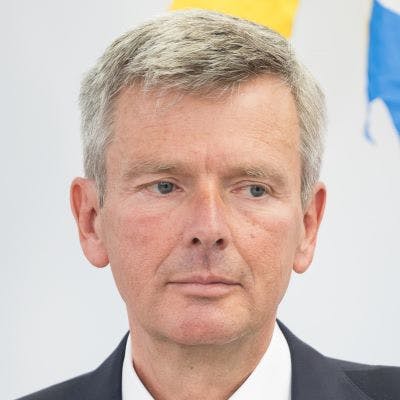
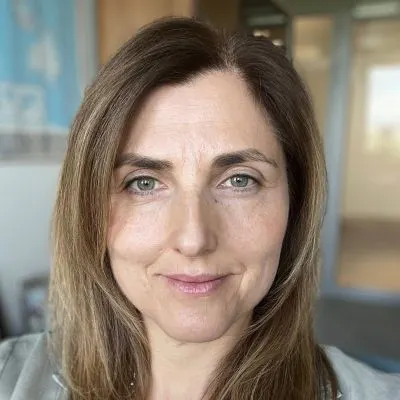
still need to be accomplishing as we move forward, I'm very pleased to welcome a wonderful panel. I'll start from over there with Max. Max Johns is the Vice-Chair of the Special Tripartite Committee of the MLC and a former shipowner himself. Next to him is Beatriz Vacotto, the ILO's Head of the Maritime Unit. And here we've got Mr Jainal T. Rasul Jr., the Undersecretary of the Department of Migrant Workers from the Philippines. And last but not least, we've got Carlos Muller, who's the delegate of the Workers' Group in Brazil and also the President of
the National Confederation of Waterway and Air Transport, Fishing and Ports, or CONTTMAF Workers' Group in Brazil. Welcome, and it's good to have you here. So, I'd like to start with you, Undersecretary. It's been twenty years, as we said, since the MLC was adopted, and many have described it as a great success, one of the greatest successes of the International Labour Standards. Why is the Convention so effective, and what is it about it that's made it so successful? Thank you very much, Zeina.
From the Philippine perspective, since its adoption twenty years ago, the Maritime Labour Convention, or MLC for short, has been effective in terms of striking a balance between two competing goals – not necessarily competing, but two main goals – of protecting the rights and welfare of seafarers and ensuring fair competition among shipowners as well as the stakeholders.
The MLC holds particular importance to the Philippines, it being one of the main suppliers of seafarers, comprising about 25 per cent of the total global supply of seafarers. In 2012, the Philippines ratified the Convention, being the 30th country to ratify, enabling the Convention to take its legal force. Thus, as we mark the 20th anniversary of the
Convention this year, we recognize its tremendous importance and contribution to seafarers all over. Aside from the international balancing standard set forth by the MLC, the Convention also is very important in terms of compliance and enforcement mechanisms through flag State control as well as port State control enforcement. I understand that since the last 20 years, about a
thousand ships or vessels have been detained due to deficiencies and non-compliance, particularly those found wanting in the employment contracts of seafarers and poor living and working conditions. The Philippines therefore has a stake in the effective implementation of the MLC and in shaping key reforms. On the national level, the Philippines has undertaken significant measures to implement the MLC and related global standards.
One, to reinforce seafarers' rights and welfare. The Philippines has enacted the Magna Carta of Filipino Seafarers, Republic Act No. 12021, in 2024, a national legislation which aligns with the objectives of the MLC, 2006. The Magna Carta builds upon the foundation laid by the MLC. However, while the MLC guarantees decent work at sea, the Magna Carta broadens the policy lens to encompass the entire well-being of Filipino seafarers and their families,
from recruitment and employment to crisis response, return, reintegration and lifelong professional development. We also have the Manila Declaration of Seafarers' Human Rights, Safety and Well-being, a Philippine-led initiative which was signed on 3 September 2025 in Manila and now endorsed by a growing number of countries. The Manila Declaration's key commitments include the need to uphold seafarers' human rights on land and sea, to fully enforce the MLC, 2006,
and to improve emergency preparedness and response in times of crisis and threats to maritime safety. And just yesterday, during the celebration of Migrant Workers Day in the Philippines, the Department of Migrant Workers, led by His Excellency Secretary Hans Leo J. Cacdac, signed and approved three legal instruments, namely: One, the 2026 DMW Rules and Regulations Governing the Recruitment and Employment of Overseas Filipino Seafarers.
Two, the Standard Employment Contract Governing Overseas Filipino Seafarers. And three, the Standard Employment Contract for Fishers, after a year of consultation with the various stakeholders. Thank you, Zeina. Thank you. And of course, Filipino seafarers make up a very important number, or percentage, of seafarers globally. So, if we were to move from the experience of the Philippines to the wider experience of workers and reflect on the MLC, Carlos, what would you say makes the MLC really so special? Well, thank you.
The MLC for us was a real game changer. It brought in one very modern document, the whole seafarers' rights that were before that in more than 70 documents. It established that decent work and living conditions aboard are not an option. They are an obligation that should be followed in all countries. It combines rights with enforcement mechanisms, and it brings contracts, wages, repatriation,
medical care, rest hours, accommodation, food, welfare and protection against abandonment. The complaint procedures, the inspections and the port State control are very important mechanisms for the enforcement of the MLC. In Brazil, labour inspectors are working very hard, and we can say that they have an important role in identifying and addressing violations,
and they are really working well in Brazil. The MLC also promotes fair competition between the shipowners, and we understand this is very important for them. For workers, the MLC is the floor, and with discussion, with collective bargaining, we want to build a proper playing field all around the world. And to finalize, tripartism keeps the Convention
alive, updated and connected with the real problems of the seafarers. Enforcement is very important, as you've just pointed out, and we wouldn't have enforcement if we didn't have the partnership with employers. Max, why is the MLC so important? Well, the MLC is, I think, first of all, really a reason to celebrate because after 20 years we can see that a multilateral body, a tripartite body, shaped something that is alive and working,
and is working as was expected, or almost. So that was a promise that is fulfilled, and I think that is something to celebrate. The real achievement, I think, is to bring labour standards into the centre of maritime. As Carlos said already, that's very important for competition, but it's also especially important, of course, for the workers. Having these workers' rights now at the centre of the maritime legal framework
is something we had not really seen before. We had lots of regulations, but they were not bundled, they were not very clear, and every flag State could adhere to them differently. Now it's combined, now it's fair. And I think the real step change has been that shipping regulations so far had been very technical. We focused on the technology of ships after the Titanic so that ships would not sink, and that was very material. And the real discovery was what the key point is: the seafarers. And I think that's the biggest achievement.
So, we've heard from government, workers and employers here. If I was to turn to you, Beatriz, we are the proud custodians of social dialogue at the ILO. So, from your perspective, from the perspective of the ILO, what makes the MLC so special? Well, thank you. I think social dialogue is the main pillar of this discussion because through social dialogue we adopted new mechanisms never tested in other ILO standards that have proved successful. Today we have 112 ratifications representing more
than 96% of the world fleet, including the main labour-supplying countries like the Philippines. So the big success is that the Convention is operating in practice. One technical element that has made a big difference is the non-more-favourable-treatment clause. This is very technical, but it means that if a ship from a non-ratifying country enters a ratifying port, that port can require a respect for seafarers' rights. And this has triggered, in practice, a lot of ratifications because if you in any case need to comply, you better ratify
and have your legislation enforced. So that very, very important element. Of course, the amendment system was mentioned. The possibility to quickly respond to new challenges and to amend the provisions of the Convention when needed and when there is consensus is key because this maintains this instrument as relevant. And just to mention some examples, after the pandemic the Convention was amended to introduce a very clear right to internet access for seafarers. And also last year, important amendments were adopted on violence and harassment on board,
and on shore leave, which is a key right for seafarers where there were issues. Thank you very much. So we've heard about what makes the MLC, or the Maritime Labour Convention, so special. Let's now place it within the current context. The sector has been tested by one crisis after the other. We had the COVID-19 pandemic, the Ukraine war, and now of course what's happening in the Middle East and the Strait of Hormuz. So when we look at all of this, what can we say? What do these crises reveal about the importance
of the MLC and specifically the need to protect workers, or seafarers, in emergency situations? Maybe I can start with you, Carlos. We can say that the recent crises showed us two things. First, the MLC is very important for guaranteeing rights. But second, this can become very fragile during wars, conflicts or disruption. COVID-19 exposed serious failures in crew change, repatriation,
medical care and contact with families. The war in Ukraine, attacks against the Iranian territory and the disruption in the Strait of Hormuz show how political conflicts directly affect seafarers. Seafarers must not be treated as a side victim of any war. They should always be in the centre of the discussion. And we need multilateralism to find what's the best way to protect them.
Unilateral maritime trade sanctions also have contributed to grow the questionable registry and the shadow fleets. They are not good for the seafarers. We cannot enforce any rights in shadow fleet vessels. So we need together efforts to have ships preferably registered under real flags, national flags. That's what we believe could bring more rights in the sector.
Max, can I turn to you and ask you as well? What are your thoughts on this? I think we learned, if I go back to the COVID crisis, we learned a lot there. And at the ILO, the ILO was extremely active there to save some seafarers, to get some seafarers free, to get seafarers home. But we learned that shore leave and especially trying to get seafarers home didn't work. It didn't work properly. We had seafarers work for many months, too many months, on board of the vessels, and some seafarers couldn't get home, sometimes even for years.
So there was a fundamental default which we could not foresee twenty years ago. And I think this fault line has to be corrected. And the fault line is that we thought we could do everything if we regulated within maritime. But in COVID we discovered we need also the border controls. We need the ministries of the interior, the ministries of the exterior, the ministries of health. And most of them had not even been aware of the MLC. So the MLC is very focused on maritime, of course, that's what it's supposed to be, but everybody
else in the countries is also bound by it. And that was new, and that didn't work, and that's why seafarers suffered. And that is something we have to definitely improve, and that's one big learning. A very big learning. From the other crises, just a short one only. We see that seafarers suffer greatly also because they don't have shore leave. They can't get sometimes food on board of the vessels, as we see in the Middle East crisis right now. Things that wouldn't happen to airline crews, that wouldn't happen to other transport workers. But seafarers are treated as a different species,
as a different kind of human beings, and that is something we have to stop and change. Undersecretary, if I can turn to you again, given the Philippines' firsthand experience with seafarers, what would you say we've learned given the last crises that we've had, and what do we need to do in order to better protect seafarers during emergencies? Yes, the Maritime Labour Convention has so far been successful, but we have seen changes recently. Various geopolitical tensions, armed conflicts,
war, pandemics and even other crisis situations require more strategic reforms on the part of all of us, beyond just the traditional labour standards, and require a more responsive, resilient and realistic approach for seafarer protection, safety and security. This means that seafarers' rights and welfare must be protected during armed conflicts or piracy. There's a need for stronger cooperation among maritime stakeholders, including
Member States governments, to respond to these conflicts and emergencies and to be accountable to the seafarers' safety and security, and shall assist in all possible means to facilitate their rescue, safe passage and return. The mechanisms that need to be strengthened during crisis situations include the following: financial security and abandonment protection, mandatory repatriation, shipowner liability for wages and welfare,
onboard complaint procedures, and many others. At the end, the continued success of the MLC depends on its ability to evolve with the challenges ahead and safeguard the life and safety of our seafarers. Thank you. Beatriz. Yes, these recent crises have told us very clearly that seafarers are key workers. I think in the maritime sector you knew it. You cannot operate without the seafarers. But the rest of the world is not that aware. These days we see that a blockade,
where seafarers cannot work, where shipping cannot work, is causing impact all around the world. And during the COVID pandemic we didn't see that clearly because trade continued, seafarers continued working in the very terrible conditions that you mentioned. So societies today cannot operate without seafarers, and we hope that this is now a clear message that is now included in the text of the Maritime Labour Convention. The Convention was amended last year. We have a clear provision requesting governments to
recognize seafarers as key workers and give them those rights, facilitate transfer, access to medical care, shore leave. And as Max said, the MLC has been a key tool for the ILO to work with other agencies, with the World Health Organization, with the International Maritime Organization, to say we need to work together to make these rights enforceable. And the ILO Committee of Experts have clearly said that the MLC cannot be suspended during crises and, to the contrary, during these crises these minimum rights have to be enforced.
And I think I want to highlight what you said, Undersecretary, minimum rights. The MLC contains minimum rights, but through collective bargaining, Carlos, you mentioned, and with the shipowners and through legislation, you are working to improve those rights, to go beyond and to ensure the overall well-being of seafarers, which includes also their families, as you mentioned. Thank you very much. I mean, it is such an interesting and important topic. I'm afraid this is all the time we have for today. We have learned a lot and heard a lot about the importance of multilateralism, the importance of working across agencies, across different sectors
in order to ensure that seafarers continue to be protected as they face more and more crises. So that's all for today's episode. Thank you so much for being with us today and for listening. We have accomplished a lot. We have a lot still left to accomplish, and we hope to continue with our social dialogue on the MLC. To our audience, thank you for being here. We hope you'll stay with us and you'll join us for more lunchtime conversations. We'll have much more for you this week and beyond.
Now, in the meantime, please don't forget to follow us on social media. You can find us @ILO on Twitter, Facebook: @International Labour Organization. LinkedIn: International Labour Organization. Instagram: @ilo_org. YouTube: ILO TV. Until the next time, take care and see you soon.