Good afternoon and welcome to our lunchtime conversations from the International Labour Conference here at the Palais des Nations in Geneva. These conversations are brought to you by the ILO's Future of Work podcast series. I am Ibon Villelabeitia. Across the world, labour markets are undergoing major transformations driven by digitalization, the green transition and demographic changes. These shifts are reshaping not only the types of jobs available, but also the skills workers
need throughout their working lives. A new ILO report highlights that lifelong learning is becoming increasingly important for jobs, for better jobs, innovation and more inclusive societies. However, access to quality learning opportunities remains deeply unequal. Today we'll discuss how workers and employers are adapting to a changing world of work and what it takes to make lifelong learning a reality for everyone.
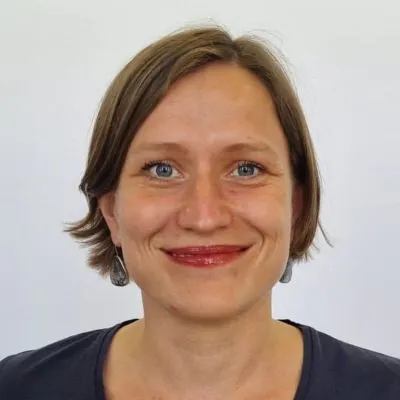
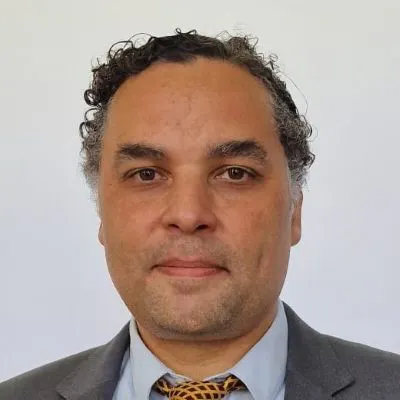
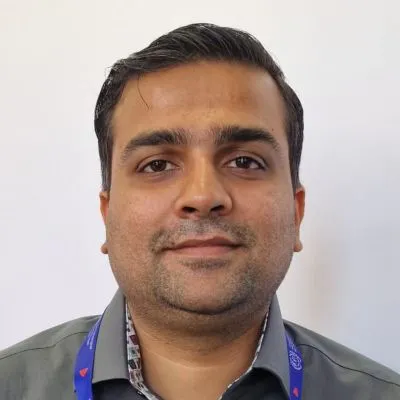
To help us unpack these issues, we have a panel bringing together research, policy, workers' and employers' perspectives from different parts of the world. We have Hannah Liepmann, who is an economist in the Research Department of the ILO. Thank you, Hannah. We have Pedro Moreno da Fonseca, who is also at the ILO, a lifelong learning specialist. We also have Chaudhry Saad Muhammad, who is the General Secretary of the Pakistan United Workers Federation.
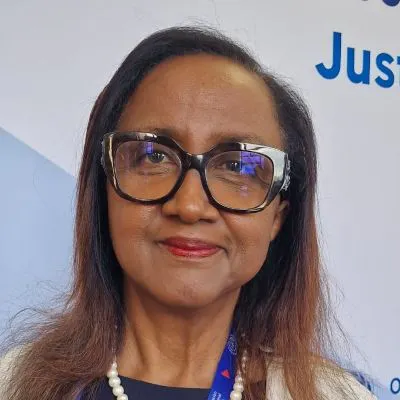
And last but not least, we have Josephine Andriamamonjiarison from the Employers' Association of Madagascar. She is the Honorary President of the Employers' Association of Madagascar. Hannah, let me start with you. We all feel that labour markets are changing rapidly. What does the evidence tell us about who has access to learning opportunities today and who is being left behind? Yeah, exactly. Thank you for this question.
As you said, labour markets are changing rapidly and skills are an important factor in this process because skills determine who can benefit from these changes and who risks falling behind. That means that lifelong learning also becomes increasingly important as a means to make sure that labour market inequalities do not increase even further. Against this background, in our new ILO report on lifelong learning and skills for the future,
we mapped the state of lifelong learning globally. And what we find in general terms, as you already referred to, Ibon, is that access to quality learning is out of reach for many adults and it is also highly unequal. One figure that we continue to cite in this regard is that globally only 16 per cent of workers have access to structured learning over the course of a year. Interestingly, this does not change much between countries of different income levels and
it's also quite similar across different regions. Alongside the report, we published a regional analysis that you can find on our web portal if you are interested, but just to make the case here now that access to learning is low for workers across different regions. Now, we wanted to go an important step further and understand in much greater detail how people are learning because this clearly goes beyond formal education alone. And when we did this analysis,
we found that there were important gaps in knowledge and evidence. This was especially true when it comes to learning in the world of work. It was also especially true outside of high-income countries. Because of this, we designed a new survey tool that we piloted in selected middle-income countries and that is available to the public. This analysis really revealed that especially for informal workers, they learn mostly by
doing. They don't have additional support or learning opportunities. And the same is true for illiterate workers, for workers with low levels of formal education and also for workers in small enterprises. Related to this, we also discuss important gender gaps, particularly when it comes to access to quality apprenticeships. So just to conclude, there's still a very long way to go and I look forward to this panel discussion
because I think we'll hear about possible policy solutions and also how they work in practice. Thank you, Hannah. I think that gives us a clear picture of the scale of the challenges. Now let's move on to policy solutions. Pedro, if I may move on to you. We hear a lot about the need for lifelong learning. But what do we know about what actually works? What are the key ingredients of effective lifelong learning systems? Thank you so much for this question. First of all, I'd like to say there's no
ideal solution, right? There's not one single solution that works for every country. All countries have different histories, different systems and different cultures. So there's not an ideal recipe for a lifelong learning system. This being said, we did look into what works, both at programme level and at policy level. So I'll mention a bit of both. In terms of what works at programme level, we ran an analysis of 167 impact evaluation
studies for programmes in education, training and other learning modalities. Essentially, a very important truth is that all learning programmes have positive effects. It doesn't matter which type. They all have positive effects on wages and on the employability of individuals. But what we also uncovered is that programmes that combine classroom and on-the-job learning tend to have much stronger effects. This is the case, for example, with quality apprenticeships,
which the ILO is strongly promoting at the moment, or combining classroom learning with good internships. Another thing, which is not necessarily surprising, is that if these trainings lead to formal qualifications, to a recognised certificate, they tend to have even stronger effects. This also advises caution in terms of the too-quick adoption of very light certificates that are not necessarily quality assured. Turning quickly to what works in policy,
we did uncover a few aspects, or put evidence behind certain beliefs that we already had. One is that clearly, when you have good tripartite governance at national and sectoral level, you tend to have better investment and better management of learning programmes. So you need strong support through social dialogue, and I'm glad we have the social partners with us here today as well. You need good institutional capacity to put all these pieces that constitute lifelong learning together in a coherent system.
Also sustained financing, which is a big issue, to really build up these systems. Despite many efforts that we have seen policy-wise in many countries, what we verify is that there is still a lot of fragmentation in these systems. So there's really a lot of work to be done. Very quickly, I would also underline the importance of really raising the bar in terms of access. It's not only about creating the solutions, it's about enabling
people to get into these learning solutions through financial support, career guidance, pathways through recognition of past experience and knowledge, and really getting the people who need it into the right solutions. Thank you, Pedro. Let's move from research and policy to what you were saying about social partners and countries. Saad, if I might ask you now, from what you are seeing in Pakistan, how are workers experiencing these changes in skills needs and labour markets? And in a context where so many workers are in
informal employment, are they able to access the training and learning opportunities they need? Thank you so much for having me here with such esteemed co-panellists. From the Pakistan context, I see that it is very clear that workers are finding these changes very difficult, especially because digitalization, automation, climate change and increasing uncertainty in the labour market are all hitting workers very hard.
Most of those who are facing this transition are facing it without adequate preparation. Why? Because in Pakistan we don't have a proper mechanism for skills development. Lifelong learning is still beyond something that we can really think about while there are very few opportunities, or even no opportunities, for informal sector workers to learn new skills.
I see that even in the formal sector, workers have very few opportunities to improve their skills at the workplace. We do have formal institutions, but we have to understand that in a developing country like Pakistan, where workers are struggling to earn their bread and butter, how can they leave their jobs for training? They don't get paid leave for training. How can they go to formal institutions to receive training and bear the resulting wage loss?
They are simply not in a position to do so. So I think we need to consider how we can bring lifelong learning and skills training from formal TVET institutions to workplaces, and not just to workplaces but also to communities and informal settings where people can easily access these opportunities in their free time and improve their skills. Not just that, we also have to see how we can ensure that workers in the formal sector are
given such opportunities by their employers, with paid leave and other forms of support. So that is very important because time is changing, and digitalization – what we see today – after five years it will be maybe 500 or 1,000 per cent more advanced than it is today. So I see that workers are not in a position, not ready for that maybe, and even if they're ready, there's no opportunity for them to learn those skills so that they can match their skills with the market and get jobs. If this inequality remains, I fear that many
workers will lose their jobs because they will not have relevant skills, and employers will be hiring people from outside and firing existing workers. So, from the workers' perspective and from Pakistan, I think that we need to make sure that in the TVET system that exists in the country, if I talk specifically about Pakistan, these institutions are not tripartite. They should be. We should ensure tripartism in these TVET institutions so that they sit together, decide,
and come up with the courses and training that are needed currently and in the future. Currently, I assure you that many of the training programmes offered in Pakistan's technical education institutions are those that were needed in the 1990s, or maybe in 2002, 2003, 2004, 2005, or perhaps up to 2010. For example, they are doing routine training in electrician work, welding and similar trades. That time has gone. You have to come up with
digital tools, AI – everything is there. One thing we also need to think about is starting from school. We have to start teaching these skills to our children from a very early age and we also have to emphasize the importance of technical education. This will be my last comment on this. I won't take much time because I know time is constrained. In Pakistan, technical education or skills training is sometimes seen as something for people
who are not good at studies, for someone who is not brilliant, which is totally a misconception. Parents put pressure on their children to become doctors, engineers, scientists or PhD scholars. But what we have learned is that many machine operators in factories earn more than a general manager because they know how to carefully handle the machinery. So it means that skills are what is most important and what can earn you more money if you are good at them.
For Pakistan, I think there is a need to revamp our education system in a way that promotes skills education because we cannot have 1,000 engineers and 1,000 doctors if there are no such jobs in the market. On the other hand, we may need 10 machinists and 10 web application developers and not have them. So I think there is a need to rethink and revamp all these things. Thank you. Thank you, Saad, for that very interesting insight from your country.
Now let me bring in the employers' perspective. Josephine, how are skills needs changing and what helps enterprises invest more effectively in skills development and lifelong learning? Thank you for this question. In Madagascar, employers are experiencing significant changes in skills requirements driven by digitalization, technological innovation, the growing economy, the blue economy, globalization and new enterprise business models.
There is growing demand, for example, for digital skills, including the use of AI, data management and information technology. At the same time, employers increasingly value skills such as adaptability, problem-solving, communication and teamwork. Many enterprises are making efforts to respond to these changing needs. Our employers' organization has established a training fund dedicated to financing vocational and professional
skills development. We also work closely with international organizations and partners to provide training opportunities to our employees. Through this initiative, many companies have benefited from capacity-building programmes offered by the ILO, especially in the field of AI. The International Training Centre in Turin has also played an
important role in upgrading workforce skills. However, many enterprises face challenges in responding to these evolving needs. Skills mismatches remain a major concern, as training and education systems do not always align with labour market requirements. In addition, limited access to quality training programmes, especially for SMEs
and businesses operating outside major urban centres, can hinder workforce development. The situation is, of course, even more challenging for enterprises operating in the informal sector, which account for around 90 per cent of all businesses in Madagascar. This is really a huge sector. To help enterprises invest more effectively in lifelong learning, strong public-private partnerships are essential. Governments can
support training through dedicated funding mechanisms, incentives for employers and policies that encourage continuous learning. Closer collaboration between employers, training institutions and international organizations is also needed to ensure that training programmes remain relevant to labour market needs and accessible to all workers throughout their careers. At the same time, the current international
context, including geopolitical tensions, rising energy costs and changes in international trade arrangements, has increased pressure on businesses. These challenges often force companies to prioritize immediate operational survival over long-term investment in training. This is why sustained support and collaborative partnerships are more important than ever to
ensure that lifelong learning remains a reality for enterprises and workers alike. Thank you, Josephine. We've talked about changing skills needs and unequal access to learning, challenges facing both workers and, as we've just heard from Josephine, employers. So let's turn now to solutions. How can countries ensure that lifelong learning opportunities are available throughout working life and that they reach those who need them most? I'm going to ask you, Saad,
first to address this question. Thank you so much. It's a very important question. From the workers' side, as I said before, if we really want lifelong learning to reach workers, we first have to make sure that it is accessible to ordinary workers. To ensure that accessibility, we have to make sure that everything we are talking about, and everything governments design, reaches people in practice and not just in policies.
For example, in a country like Pakistan, especially in the informal economy, platform workers, women with care responsibilities, domestic workers, young workers and migrant workers cannot afford to leave their jobs for training. So first of all, we need to ensure that this training is free of charge, and I think employers and governments should both contribute to it. Employers have large CSR budgets. They can
spend part of those CSR budgets on employee training. If they don't want to spend from another budget line, they can use those resources. So the money is there. We also need to be very serious about awareness. Many workers do not understand how important it is to improve their skills. They think that what they learn through experience is enough.
Experience does matter, but now skills matter as well. So we need to make workers understand this. As a worker representative, I want to give this message to my employer counterparts, other colleagues and everyone listening: we as workers are ready to learn every day, but the system must come to us, not expect workers to come to the system. Thank you. Hannah, do you want to respond? Yes, I would like to respond to that
and maybe also to the experience from Madagascar. I think we now have a very solid evidence base, and our work at the ILO has contributed to that as well, showing that it will not be enough simply to offer training to workers. As you said, many workers, especially the most vulnerable ones, will simply not be able to afford to take time off work to improve their skills. That really means that income support becomes important. This can be in the form of social
security benefits or cash transfers. The two types of support complement each other very nicely because income support allows workers to participate in training, while training allows them to acquire new skills and ideally have better opportunities in the future. As a more general observation, I think we are not looking for a model of lifelong learning that places the entire responsibility on workers, where the idea is that workers need to stay
competitive and adapt to changing labour markets. Instead, it needs to be a realization – and I assume we agree on this – that lifelong learning also benefits enterprises, helping them remain innovative, and it also helps achieve broader societal goals. This means that it needs to be perceived as a shared responsibility. That also entails sustainable financial solutions, which likewise need to be understood as a shared responsibility.
And we already have one example that Pedro alluded to: quality apprenticeships, where these ideas are implemented in practice. Thank you, Hannah. Josephine, you were nodding when Hannah said it's a shared responsibility. Do you want to take it up from there? I think that countries can make lifelong learning more accessible and inclusive by adopting a shared-responsibility approach involving governments, workers, employers' organizations, training institutions and international partners.
First, learning opportunities must be available throughout a person's working life and adapted to changing labour market needs. This requires flexible training models, including online learning, workplace training, microcredentials and short courses that allow workers to learn while remaining employed. This is a major challenge because employers
do not always want their employees to go for training because they need them at work. Second, targeted support should be provided to those who need it most, including workers in SMEs, women, youth, workers in rural areas and those employed in the informal sector. As I said, the informal sector accounts for 90 per cent of enterprises in Madagascar.
Third, sustainable financing mechanisms are essential. Training funds, public-private partnerships and support from international organizations can help reduce the financial barriers that prevent enterprises and workers from investing in skills development, especially in the informal sector. In Madagascar, when we established our fund,
our members did not want the fund to finance the informal sector. So we had to find funding from partners to finance that sector. So this is very important. It has to be a collaboration between the government, employers and international partners. Thank you. Pedro, do you want to add? Yeah, everything has been said, right? But okay, I'll try to add something.
I mean, a more generic comment that possibly puts these things together. I think we all know there's a massive investment gap when it comes to learning solutions. The key thing is to think in the medium and long term and not oversimplify how this investment must be made. It's not only about formal education and training. It's really about diversifying learning solutions
and pathways to qualifications, and I think that's what all the panellists have been saying. So it's really not only about having the funds but putting them in the right places, in diverse solutions that cover the full needs of the population, especially in this time of structural transition. I think all these solutions have already been mentioned, so I'm not going to repeat them. It is important to pay attention to the fact that regulatory systems and programmes really allow for multiple entry points and
make access very easy and smooth for people. I think the informal sector is indeed a very important aspect, and we haven't talked much about upgrading traditional apprenticeships, for example. Traditional learning still constitutes the majority of learning in many countries and is often the main pathway to work and jobs. A lot can be done at that level,
so programmes can be scaled up, and that's something I would also like to underline. In terms of financing, I know this has been mentioned many times, but I will still mention it from the perspective that, in the end, countries need to select an architecture for financing lifelong learning. Again, there is no ideal way to do this. There is an appropriate way depending on the challenges and opportunities a country has.
You can make use of what already exists in terms of core financing, but then you can have a lot of creative solutions that target productivity in enterprises, support small and medium-sized enterprises, reach people in rural areas and support people in sectors that are strategic for the country's economic growth and development. One last point is to invest in a more structured
way in career guidance and recognition of prior learning, meaning the validation of competencies, as well as outreach. The reality of lifelong learning is really about enabling flexible pathways to qualifications and decent work. Training in itself is not sufficient. You need all the additional elements that get people on the right track and onto a path that truly empowers them. Thank you very much. And now, to wrap up our programme, I'm going to ask each of you to look ahead.
Pedro said earlier that there are no ideal recipes and, at the risk of oversimplification, can I ask each of you, so that our audience can take this message home: what is the one thing that would make the biggest difference for lifelong learning systems? If there is a single point I would like to stress today, the priority would be to strengthen cooperation between employers, governments,
international institutions, education and training institutions, and of course workers. Effective lifelong learning systems require all stakeholders to work together to ensure that training programmes are affordable, relevant, accessible and aligned with labour market needs. Strong partnerships can help close skills gaps, expand access to quality learning opportunities
and ensure that workers and enterprises are better prepared for the future of work. Thank you. Strong cooperation, strong partnerships. Who wants to go next? Well, exactly the same thing. It's really, in the way that has been formulated before, a shared responsibility, right? Lifelong learning is not the sole responsibility of the individual who is learning. There needs to be a change in perspective. To build an enabling environment, you need
to make it a shared responsibility because you need to set an agreed vision for the development of the system. You need to pool resources from several stakeholders. You need to agree on the targets to reach and when to reach them. And you need to regularly review the options and agree on how to adjust the course you are following. So we come back to the point of strong governance, tripartism and social dialogue.
For me, that's also the key aspect. Thank you. Okay. So I couldn't agree more. In order not to repeat what has been said, let me take a step back and make a broader comment. We've now heard about these really important building blocks for successful lifelong learning systems. Lifelong learning is extremely important, but it should be one piece of a much broader policy agenda. What we will also need is investment in quality
jobs, particularly in future growth sectors such as the care economy and green employment. We need social protection. We need it in general, but especially for people losing their jobs and people who are transitioning in labour markets. And finally, this is something we have not touched upon very much during our panel today, but we discuss it in our report on lifelong learning and skills for the future. We also need to ensure that markets and societies adequately value the skills of all workers, and this is particularly important in
sectors that create social value. Thank you. Finally, Saad. Thank you. I have always been a big talker, so I thought coming last would be good. From the workers' perspective, and without trying to be too technical, I would say that the barrier is not the willingness of workers to learn. The barrier is time and opportunity.
If we really want lifelong learning to be real, then it must be built into working life rather than outside it. The current reality is that learning often has to happen in your spare time. So this shift – from learning in your spare time to learning as part of your job – can make lifelong learning something sustainable and meaningful for workers.
That is what I would say. Thank you. Thank you very much to our four panellists for this very interesting conversation and for your insights. I think today's conversation has made it clear that lifelong learning is no longer an option. Making it accessible to all workers and enterprises will require coordinated policies, investment and strong social dialogue, and from what we've heard again and again, shared responsibility. Thank you for joining us at the International Labour Conference in Geneva.
For those interested in learning more about the issues discussed today, I encourage the audience and those of you who are here to visit the ILO's Lifelong Learning and Skills for the Future portal, which brings together reports, data visualizations, regional briefs, videos and other resources on lifelong learning and the changing world of work. Be sure to tune in again as we continue to explore the major transformations shaping the world of work today. You can follow us online at @ilo on X, TikTok
and Bluesky; @ilo.org on Facebook, Instagram, Threads and Bluesky, and as the International Labour Organization on LinkedIn. Thank you for listening, and we look forward to welcoming you again soon. Goodbye.