Welcome to the ILO Future of Work podcast. In this episode, we're going to talk about the new ILO social justice report. The world is facing big changes. Technology is transforming how we work. Climate change is reshaping economies. Populations are growing in some places and shrinking in others. These shifts bring risk, but also opportunities. At the same time, people everywhere are asking for more fairness. They want jobs that respect their rights,
wages that allow them to live with dignity, and societies that offer stability and trust. The ILO report looks at the progress we've made, the gaps that remain, and the choices leaders must make to build a fairer future of work. 30 years after the 1995 Copenhagen Summit and ahead of the World Social Summit in Doha this November, the report gives the most complete picture yet of progress on poverty, child labour, and inequality, and shows
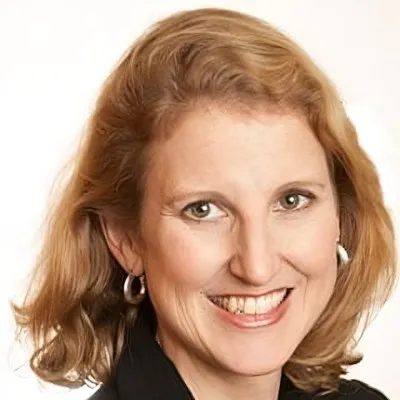
where progress has stalled. To help us understand the findings, I'm joined today by Caroline Fredrickson, who's the Director of the Research department at the International Labour Organization. Caroline, welcome, and thank you very much for being with us. Thank you for hosting this conversation. Let's start with the basics. Caroline, the social justice report is being launched at a very important moment. Why now, and what positive news does it bring? We're launching the report now because the world is really at a crossroads. You mentioned some of the progress that's been made,
but inequality and mistrust are rising, and we need to put social justice back at the centre of global priorities. There is the good news that you mentioned. Over the last three decades, child labour has been cut in half, extreme poverty has dropped from nearly 40% of the world's population to just 10% and working poverty has fallen sharply. People today are healthier, better educated, and more covered by social protection than ever before. These gains show that when there's political will and international cooperation, progress is possible.
Let's look more closely at the progress the world has made. Since the mid-1990s, what are the biggest improvements the report highlights? Right. As I mentioned, we did make some significant progress since the mid-'90s because there was political will to do so, and there was international cooperation. Child labour: fallen from one in five children in 1995 to less than one in ten today. Extreme poverty: dropped from four in ten people in 1995 to one in ten in 2023.
Working poverty has fallen sharply, and global productivity has increased by more than three-quarters. Education outcomes are also better, with secondary school completion rates rising significantly. These gains prove that collective action can transform lives. But of course, and unfortunately, not everything is positive. What are the main challenges and inequalities that remain? We're still seeing some really deeply entrenched inequalities. For example, women's participation in the labour market has barely improved in 30 years.
Informality is still the norm for 58% of workers worldwide, and freedom of association has not advanced. Stark divides persist. For example, the top 1% still controls nearly 40% of wealth. And 800 million people in the world survive on less than $3 a day. One in four people still lack access to safe drinking water. These systemic injustices require systemic solutions. In these solutions, one key issue is trust. What does the report say about
the gap between rights on paper on one side and people's real experiences on the other side? There are these rights on paper, and we've had these lofty goals, and we have made progress. The situation now is that people aren't really feeling that progress in their daily life, and there's a few reasons for that. For one thing, the progress has slowed down, and the other is that there are these persistent inequalities. For example, the fact that certainly within country inequality is growing, and the extreme wealthy have so much wealth.
People feel that on a very, very existential level. This gap between legal protections and lived reality, it undermines the very institutions that have actually helped us achieve progress and leads to dissolution. In order to make more progress, we need to tackle the issue of trust. People don't feel that actually these institutions that are supposed to help them are actually helping them. Exactly.
We need to recommit to that international cooperation and the political will to actually make progress. Let's turn now to the future. We are facing huge changes. How will climate change, technology, and demographics shape social justice in the years ahead? I think any listener will know that these are the transitions that are shaping our today and definitely will shape our future. Our daily lives. Our daily lives are being daily impacted by climate change, demographic change, and certainly with technology,
as we're doing this podcast now, and what form it will take in the future. Let's talk about climate change for a minute. The shift to a greener economy could ultimately cost 6 million jobs, but it could create 24 million new ones, if it's well managed. Technology, especially artificial intelligence, could transform almost a quarter of all jobs worldwide. But without careful policies, it could really widen inequalities. Demographics are also reshaping workforces.
As we know, many low-income countries are adding hundreds of millions of young workers while wealthier countries have older and shrinking workforces. That puts pressure on social protection systems. Now again, if these transitions are handled fairly, it can actually expand opportunities. If not, they will deepen the divides that we face now. As we were saying at the start of this podcast, there are huge risks, but also big opportunities, and it really depends on how we deal with them. Exactly. Institutions and policies really matter.
The report also stresses that fairness is not automatic. Why are policies and institutions so important to make social justice real? You just talked about this a little before. Why is that so important? Social justice doesn't just arrive along with productivity, economic growth, or markets. It's really the result of choices and the institutions that we build to carry them out. The policies and the institutions at both the national and global levels, they're the ones that will determine whether growth is inclusive
or exclusive and whether transitions lead to opportunity or exclusion. Strong labour market institutions, effective social protection systems, genuine social dialogue, that's what's going to make fairness real in people's lives. If we want fair outcomes, we really have to think about how to design, invest in, and strengthen the institutions that promote social justice. That's why in the face of global challenges, we need institutions that can guide not just national action, but also international cooperation, because we all know that climate doesn't stop
at the border, nor does AI, and demographic change is a worldwide phenomenon. You said something very important, which is social dialogue. I think that people need to understand and to participate in the change that is impacting their lives. That's absolutely right. You see, that goes back to the issue of trust. People have to be invested and feel like they've been listened to. Social dialogue makes that real. It includes all the social partners. It includes employers and workers, and governments, in helping to collectively craft responses
to these major issues in the labour market. The ILO report also gave us some practical advice. We just talked about social dialogue. What does it mean exactly to apply, adapt, and amplify labour and social institutions? The framework we came up with first on, apply, is the recognition that we have made progress. We have institutions like social dialogue, as you mentioned, like labour standards, that have actually really made a difference in advancing progress
in decent work and social justice. We need to apply those existing institutions. Then the transitions that we face now are different. We need to adapt them to the new realities, whether that's regulating AI or addressing climate risks. Then we need to amplify them because we need to make sure that the policies across different domains connect so that we can manage these transitions holistically rather than in silos. Because I think, as we all know, not only does climate not stop at the border, it doesn't just affect the environment,
it doesn't just affect work. It affects everything in our society. We have to have this holistic approach to make real, effective policy responses. That leads to my question. Some may still ask why this matters to the economy. How does advancing social justice also make societies and economies stronger? Because people might think, "Okay, we have social justice on one side, and then we have business as usual." That's just a mistake because, of course, social justice is a moral imperative,
but it's not only a moral imperative. It's also an economic one because, actually, fairer societies are more stable, they're more cohesive, and they're more productive. When people actually trust the institutions and feel included, economies grow in ways that are more resilient and sustainable. Inequality, by contrast, will really undermine growth and fuels unrest. Social justice is actually smart economics. Finally, let's look at what comes next on the global stage. We were mentioning at the beginning the 1995 Copenhagen Summit.
How will this report contribute to the World Social Summit in Doha, that's going to take place in the first week of November, and to the ILO's Global Coalition for Social Justice? This Social Justice Report is a primary evidence base for global debate. We really hope it's going to help the leaders in Doha and partners in our Global Coalition for Social Justice to see that fairness is not optional, but essential. This is really about building a future of work that is fair by design and not by chance. Well, that brings us to the end of today's episode.
We've been speaking with Caroline Fredrickson, Director of the ILO's Research Department, about the ILO's Social Justice report. We explored the progress of recent decades, the gaps that still hold us back, and the choices that can help us build a fairer future of work. In the weeks ahead, we'll continue to look at the big forces reshaping the world of work. Follow us on LinkedIn, on YouTube, Instagram, and X, and now also on Bluesky and threads under our official channels. Thank you for listening.
That's all for today. Join us again soon for another episode of the Future of Work Podcast. Goodbye from Geneva and take care.