Welcome to the ILO Future of Work podcast. I'm Ibon Villelabeitia. Today we're discussing a major milestone for the world of work: the adoption of ILO Convention No. 193 on decent work in the platform economy, the first international labour standard dedicated to the platform economy. Digital labour platforms have changed the way many people work and earn a living. They have
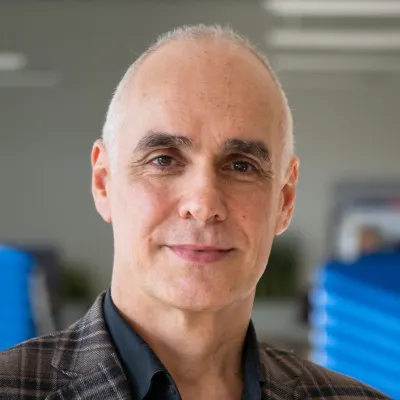
created opportunities for innovation and flexibility while also raising important questions about workers' rights, social protection, occupational safety and health, remuneration, and the use of automated systems. To help us understand what this international labour standard means in practice, we're joined today by Patrick Belser, who is Chief of the Inclusive Labour Markets, Wages and Working Conditions Branch at the ILO in Geneva, where he leads the work on
digital work platforms and other subjects such as living wages. Welcome, Patrick. Thank you. Good morning, Ibon. During this episode, we will also hear excerpts from government, employer and worker representatives who participated in the discussions leading to the adoption of the Convention at the International Labour Conference. Let's begin with the basics. When we talk about the platform economy, what exactly do we mean? Yes, good question. Well, we mean the new part of the economy which has been enabled by technology and which happens
through digital platforms or, if you want, some digital interface which is positioned really between the people who provide the services or the goods and the clients. So there are many examples. E-commerce, for example, is an example where you would buy food or you buy a book through a platform. Also transportation, you may order transportation through a platform. And even social media is part of the platform economy.
Now, what we have been dealing with in this Convention is a subset of the platform economy where technology is used, where automated systems are used in order to organize or facilitate work. And so that kind of work you find in different places. Some of the platform work is really location-based. So if you're doing food delivery, you've got to be in a particular place. If you're doing passenger transportation as well.
You could also have domestic workers, care work, all these people will be digital platform workers who will be in a particular location. Then you have also those people who are much less visible, who work on their computers in their homes. And this is the web-based platform economy where you might be a freelancer or you might be doing microtasks, identifying images or doing a small amount of repetitive tasks sometimes.
And the new Convention is covering all these different types of digital labour platforms and digital platform workers. Different types of workers, as you said. How significant is platform work today? Where are these workers found and what is the importance of platform work in today's economy? The significance of platform work has been growing exponentially in recent years. Also with COVID, of course, it was a big trigger point for the expansion of the platform economy.
And you'll find it basically everywhere. You'll find it in rich countries, in poor countries, in all the different parts of the world, with different levels of presence, let's say. Sometimes a bigger platform economy in some countries than in others, but it's really there everywhere and it's in expansion. In terms of how many people work in the platform economy, it's not so easy to actually know.
The European institutions believe that there are about 40 million digital platform workers in Europe. In China, there is an estimate of about 85 million workers doing this kind of work. And globally, you have numbers ranging from 150 million to 400 million. But in reality, we don't really know. And I think this is also a big opportunity now for the ILO to get more involved in better measurement of the platform economy.
So that would be working with Member States who want to know how many of their workers work through platforms, and developing perhaps labour force surveys with special methodologies where we could better understand how many people work on platforms, but also how they work. Because some people work full time on platforms. It's their main job. It's their main revenue. Many others work part time on platforms
and sometimes they complement their remuneration with this kind of work. So you want to know how much these people work as well. And one complication that we have also in measuring the platform economy is that workers have different employment statuses. So you have some workers who are employees employed by the digital platforms, but many others are independent contractors. And so they don't appear in the list of employees of the platform.
So that's an added challenge. But this work is really important and we want to start it as soon as possible. Let's now hear an excerpt from Colin Jordan, who is a government representative and Chairperson of the Committee that led the negotiations on the Convention. We discussed the opportunities that the platform economy creates, including opportunities for innovation, flexibility and formalization. We also discussed the challenges, including rights at work, social protection,
occupational safety and health, remuneration, automated systems, and the importance of a human-centred approach in a rapidly changing world of work. My question to you, Patrick. Colin highlighted both the opportunities and challenges created by the platform economy. How does the new standard address these? That's also a very good question. I would like to start the response by reminding
the people who listen to us that we are a tripartite organization. And so the negotiation of this new Convention was done with the participation of governments, all kinds of governments, north, south, east, west, but also with the very active and strong participation of workers and employers. And so the Convention is an end product of all these negotiations where the parties that negotiate have different
perspectives on the platform economy and on what this Convention should be. So I would like to put forward the idea that the outcome here is a very balanced outcome because it is based on the views that have been exchanged, the compromises that have been made, which reflect both the need to take these challenges and to use these opportunities that are provided by the digital platforms,
but at the same time to strengthen the protection of workers who work on them. So the idea is really not to stifle innovation or to reduce the size of the platform economy. On the contrary, it is to make sure that when the platform economy grows, the workers also benefit in terms of better protection. The preamble of the Convention shows this idea very clearly.
It identifies that the platform economy has created opportunities for business. It has created employment. It has created new possible ways to formalize workers and enterprises. At the same time, it recognizes that there are decent work deficits, which is why the adoption of the standard was really necessary. If you allow me, I'd like to give another example which is perhaps particularly important. It's the articles that were negotiated on the impact of the use of automated systems.
This is really something new in an ILO Convention, that we are going to discuss algorithms and automated systems. I think what we have here we have a very balanced approach. It does not prohibit anybody from using automated systems. It doesn't require from anybody to reveal commercial secrets. But there are a number of things that are expected from the platforms, which are to inform workers that such automated systems are used, to also allow workers, upon request,
to receive an explanation when some important conditions have changed, and if the workers are deactivated, they can expect a response from the platforms, a response which is reviewed with human involvement, not just the machine providing a response to the workers who have been deactivated. In addition also, the platforms have to make responsible use of these automated systems. So we think that this is very reasonable.
It's not about regulating the technology. It's about regulating the impact of the technology on working conditions. And it should be sufficiently flexible to allow both the continued use of opportunities but also protecting workers from some possible abuses. Indeed, as you mentioned, the idea is not to stifle innovation but to ensure that workers benefit from it. We will now hear from Ewa Szwedzińska, who is the employer Vice-Chairperson who
participated in the discussions that led to the adoption of the Convention as well. The success of this Convention will ultimately not be measured by the negotiations we concluded yesterday, but by whether it improves outcomes in practice, whether it helps workers access opportunities, whether it supports entrepreneurship, whether it encourages innovation, whether it strengthens sustainable enterprises, and
whether it allows the platform economy to continue contributing to economic inclusion and growth. Building on Ewa's points that the success of the Convention will be measured by its impact in practice, what could this look like? And how can the Convention support entrepreneurship, innovation and sustainable enterprises? Well, let me say first of all that Ewa is completely right. The success of the Convention will depend on its impact on the ground, in the real economy.
This in turn will depend on the number of countries that are going to ratify this Convention. So this is very important that we are able to secure a significant number of ratifications. And also those countries that will not ratify, we hope, will be inspired by the text of the Convention and use it as guidance for developing their own regulations. So overall, I'm very optimistic that we will have a lot of interest in this
Convention and we hope we're going to have a good ratification rate. We've seen in the preparation for this Convention that we have received a lot of questions and responses from governments from all over the world because many of these governments are currently regulating – it's a new phenomenon. So there is a lot of interest. I think a lot of governments are looking at the ILO to see this guidance.
We are the UN agency for labour issues, so it's quite natural that they expect the ILO to take a position through this Convention in particular. I'm also optimistic that this Convention will have a big impact because it is a relatively flexible and principles-based Convention. It states some principles, but it is not very prescriptive and doesn't prescribe how the governments should implement those principles.
For example, when it comes to the fundamental principles and rights at work to be guaranteed, respected, promoted and realized in the platform economy, how this will be done is up to the countries themselves. This was also the secret to being able to actually get the Convention agreed. We focused on the principles but didn't enter into too many details where we would have lost a lot of country support.
On the question you asked about entrepreneurship, innovation and sustainable enterprises, I would like to highlight, in addition to the fact that the Convention is principles-based, the article about the classification of the status of workers as being in an employment relationship or not. Here we have agreed that the status of workers should be classified mainly
according to the facts of the work that they do. But we are not prescribing that they should all be employees, and we are not having a presumption that they should all be employees. So it's also a Convention that respects the diversity of the platform economy and accepts that some workers will be employees and some workers will be independent contractors or self-employed. That flexibility will also be very important to support entrepreneurship and innovation, I think.
Plus there is an article in the Convention which also supports the creation of decent employment in the platform economy. So this is also something that is encouraged in the Convention. A principles-based Convention, but flexible, as you said. And a lot of governments are looking at the ILO for guidance. Let's now hear from Amanda Brown, who is the worker Vice-Chairperson. For the first time in the history of international law, the women and men who move our cities,
who carry our meals through the rain, who clean and care in our homes, who label the data that trains our machines, and who answer the call of an app at every hour of the day and night, these workers will be named, recognized and protected by a binding international standard. Today, they cease to be invisible. Women and men who carry our meals through the rain. As Amanda just said, how does the Convention address some of the challenges
faced by platform workers, including those whose work is often invisible? Very beautiful words there by Amanda. I would say that first of all, the fact that this Convention now exists gives visibility to these workers, the digital platform workers. They are recognized by an international Convention and that is very important. The Convention covers all digital platform workers.
This is also very important. So it covers those who work in a particular place, like delivering food or transportation, but also all of those who work in front of their computers and who are a very invisible workforce. I think that is an element of the Convention which contributes to strengthening the labour protection for these workers. Now, on how the Convention really does so, it does so in many different ways.
But I would like to highlight some areas where the Convention establishes protections and strong protection for workers. First of all, it is requiring from members to respect, promote and realize fundamental principles and rights at work for the platform economy. This is very important. We have a number of articles that address the working conditions of the platform workers
and offer protection in the area of occupational safety and health, the correct classification with regard to the existence or non-existence of an employment relationship, remuneration or payments, access to social security, data protection for platform workers, and also the prohibition of the suspension and deactivation of platform workers' accounts if those are based on discriminatory grounds or if they are unlawful.
I think if you read the text, you will see there are quite a number of articles in there which offer comprehensive protection for digital platform workers. You mention all these protections. How does the Convention help ensure that these rights are respected in practice? So that is of course a question that will apply to all the Conventions of the ILO. Now our Member States, those that ratify the Convention, will implement it
in consultation with the most representative organizations of workers and employers through legislation, new laws and regulations. Social partners will also implement the Convention through collective bargaining agreements. There may also be judgments in courts of law. All of these processes are going to translate the Convention from what it is now,
an international Convention at the international level, into its application in the countries that have decided to ratify. The supervisory system is there also to help with implementation. But then we also have within the Convention an article that guarantees access to safe, fair and effective dispute resolution mechanisms. So we hope that this will set the basis for well-enforced and respected protections.
Let's hear again from Colin Jordan, the government representative and Chairperson of the Committee. The platform economy is largely a phenomenon shaped by younger generations. Millions of young people earn their livelihoods through digital labour platforms. Many of them are not following our debates. They're not following our amendments. They're not following our voting records. But they do care about whether the institutions
that represent them are capable of addressing the realities they face. The Convention has now been adopted. But what happens next, from ratification by Member States to implementation? Could you walk us through the process? Yes, of course. Under the ILO Constitution, Member States now have an obligation to bring the Convention to the attention of their competent authorities. That would normally be a national parliament.
They also have to determine whether the country will ratify the Convention or whether there is a need for some legal adjustments or some measures before the country can ratify. That is going to take a little while. In the meantime, the ILO will promote the ratification of this Convention and its implementation. We have decided that this will be a priority in the course of this and next year. We have a lot of offices around the world, we have regional offices and country offices,
which will also promote this Convention in the countries with which they work. The ILO on its side will try to develop a global programme to support our constituents, which are governments, employers' organizations and workers' organizations, to implement, maybe start to implement some provisions of the Convention even though the Convention may not yet have been ratified. That is always upon the demand of the Member States that we provide our technical assistance.
But we have already received a lot of requests. So the main challenge will be for the ILO to provide the level of support that is expected from our members. This brings us to the end of our podcast. As we have heard, Convention No. 193 represents an important milestone not only for the platform economy but also for the broader world of work. It demonstrates how governments, employers and workers can come together through social dialogue to address new challenges arising
from technological change and shape a human-centred digital transition. Our thanks go to Patrick Belser, Chief of the Inclusive Labour Markets, Wages and Working Conditions Branch at the ILO, for helping us understand what this new international labour standard means in practice. You can learn more about the Convention No. 193 and the ILO's work on the platform economy on the ILO website. Thank you for listening. You can follow us on social media on YouTube, Facebook and LinkedIn
at @International Labour Organization, and on Instagram, X, Bluesky and Threads at @ilo.org. And for now it's goodbye, and see you soon for another episode of the ILO Future of Work podcast.