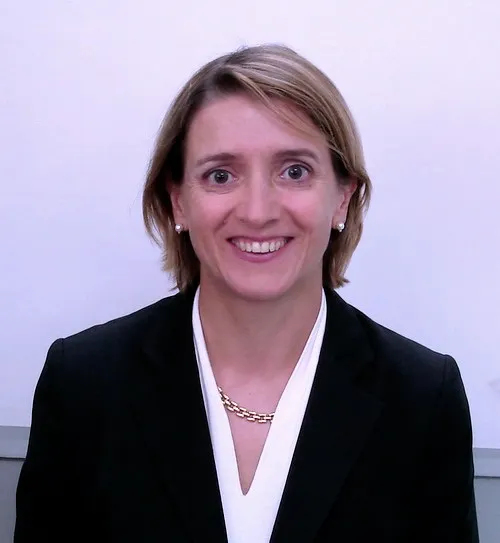
-Hello, and welcome to this edition of the ILO's Future of Work Podcast. I'm Sophy Fisher from the ILO. My guest today is Allen Blue. Allen is co-founder of LinkedIn and currently Vice President of product design. LinkedIn, as many of you all know, started out as an online professional networking and career development platform, but now it's much more than that. It covers research, training, networking, as well as job
searchings and postings. What's more, with approximately 725 million registered members in 150 countries covering 24 languages, it provides a unique overview of what is happening in the world of work. Really, it would be hard to find somebody who has a better view of the role that technology is going to play in the world of work. Allen, welcome, and thank you very much for joining us. -It's great to be here.
-I heard you say in earlier interview that you had been working on future work issues since 2012, is that correct? -Yes, that's right. In 2012, I had the great fortune to participate in a set of panel discussions, which were about the presidential elections in the United States. One of the people who was sitting on the panel with me was the president of a community college.
He claimed that he had closed the skills gap in his area. I was very interested in this and asked him how. He basically said, "We had a simple formula for it. We went out and talked to the companies who were nearby us in our area, asked them what skills they needed to be trained and we trained them. Suddenly our students had 80% placement rates upon finishing coursework at our college."
That got me thinking about all the things that LinkedIn needed to do regarding making sure that we were able to close what we call the training gap to make sure that people are able to take jobs. It was right about that same time that LinkedIn got big enough as an organization and as a network to be able to begin extracting insight from our network. With 725 million people with information about the jobs they hold, the schools they went to, the things they are doing in our network,
we can extract a lot of valuable insight about what's happening in the economy around the world. Those two things happened at the same time, back in 2012. Ever since I have been interested not only in what the world of work looks like and is going to look like but also we want to do about it. -How do you see it? How do you see the future of work? -Right now, it's obvious to us that every job we're looking for in the future is going to be either a technology job
or a technology-enabled job. When we look at the fastest-growing jobs, the ones which have the greatest potential for future growth, all of them are either engineering jobs, data jobs, machine learning jobs or they are marketing jobs, customer service jobs, which are enabled by technology. If you're a marketer, now you need to know how to use Facebook. You need to know how to use Google and how to target advertising, how to use that technology to your advantage while you're doing your work.
The same is true for every growing job in the world right now. -Not everybody has the same access to technology. You and I are lucky you're sitting in California, I'm sitting in Switzerland, we are very privileged, but there are plenty of people who don't have access to this. One of the things that people are concerned about the future of work is that it's going to broaden inequality.
How do we stop this tech revolution doing that? -I guess I would say first that every era has had gradients, if you will, in terms of demand for different kinds of work and different types of skills. All of them have found themselves in one form or another where employers are interested in hiring specific kinds of skills. They're so interested in it that they're willing to take additional
and extraordinary steps to do so. You can think of probably the very best example is Isabelle laboratories back in the early days of telephone communication, they needed to essentially create a whole collection of people who understood these new technologies. Instead of relying upon the educational institutions to train those people, they brought them in and train them themselves,
and prepared them for these jobs which were brand new. That's very much the world we're in today. When we at LinkedIn talk to our customers, talk to companies, they are willing to do extraordinary things, to bring people into these high-in-demand jobs. The real question for us needs to be, how do we make sure that that incredible demand for these roles is something which finds its way equitably through the workforce instead of falling once again to the
people who find themselves as you say in these privileged positions? In order to do that, there are three big areas that we look at which get in the way. The first one is very traditional problem which is a training gap. Do I believe that when it comes to learning how to use technologically-enabled tools like for instance, a computer-driven five-axis sawmill? Do we believe that everyone in the world has equal access
to the training required to be able to do that work? The answer is absolutely not. Our question is, how can we close that gap, and can technology actually play a role there? For many years, we've talked about the value of online education. Is it possible for us to essentially deliver the education necessary to run that sawmill to everybody in the world? We've made progress.
There really is progress and at LinkedIn learning, we offer training in many different skills and skill areas but there's a fundamental data and technology access problem. Do you have access to broadband? Do you have access to a computer? Do you even have access to electricity to be able to do it? Then can you actually afford the products when they're actually out there? There are problems that need to be addressed directly there, but there's a second thing which is really important in this area,
which is, hey, are employers going to pay attention to a degree if you will, that you get online? Traditionally employers are looking for the fastest most efficient way to bring skilled people into their workforce. They have traditionally relied on things like a pedigree from a university, a specific degree, a bachelor's degree, in the United States, a bachelor's degree is required for far more jobs than the skills implied by a bachelor degree are required for. That's because it's shorthand for this person's a skilled person.
We not only need to overcome the access to online education in order to make it work but we also need to make sure that employers are willing to act on these online training methods in order to be able to make their hiring decisions. -What we're talking about here really is social justice, isn't it? Because equality and equity is directly linked to social justice. What you've been talking about is a very strong investment involvement of the private sector in this transition.
Do you think that is actually realistic on a global basis? -I'll go back once again to the question of employers having this massive need for this talent. For example, LinkedIn, we have a need for this talent. We're obviously a technology company. We hire a lot of technology people, engineers, and so forth, but we have been competing with our peers in Silicon Valley and all around the world for that talent. We have actually built two projects at LinkedIn, one called Reach which
is an engineering apprenticeship program, and one called Shine which is a combination of LinkedIn learning and a new hiring process in order to be able to address these issues. Basically, it means that we are trying to broaden our own talent pool by doing things which would normally be considered extraordinary. Companies are right now very open to the ideas of reaching outside their normal talent pools and their normal processes for this type of talent.
I do believe at a large section of the private sector is willing to make these changes. I do think it's actually a great opportunity, not just for companies but also for their partners in labor. Traditionally, not every union but many unions, guilds, labor organizations have been trainers, have been people who have discovered the needs that their employers and the employers they work with have,
and be able to provide that training. I think we are at a position where the demand is strong enough in two directions, one towards technology, one towards green skills, and the green economy to encourage a large portion of the private sector to participate. -People associate jobs, tech jobs, and the introduction of greater technology into the economy with more unstable work with the gig economy.
Do you think it's actually possible to shift it so that tech jobs actually create security for people? -Yes, I do. I think that there's a wide variety of different types of tech jobs that are out there. Most of the tech-enabled jobs actually fall within what we would consider a sort of normal job framework. They look like full-time roles. They are full-time roles.
They are at companies where these tech workers not only are-- or tech-capable workers are not only full-time employees but where they are treated as some of the single most important talent at the organization. As a matter of fact, I would argue even the tech workers and people who are working in tech-enabled jobs actually have substantially greater power in terms of defining their own roles, the way in which
they work, and their relationship with their employer than people in non-tech enabled jobs. -The ILO has identified a number of other drivers of change in the future of work notably climate change, which you mentioned, green jobs, demographics, and globalization. How do you see those factors interacting with changes in tech? -At LinkedIn, we have done a bunch of work in trying to
understand the green economy. As a matter of fact, we've just published some results of some of the early work that we've been doing in that area. Essentially, we are looking at a substantial transition in many industries and within many specific skills towards the world of green energy. I can give you a couple of examples. A good one might be that an investment analyst, someone who
is trying to evaluate whether an investment is a good thing or a bad thing, and recommend it to their clients can no longer do so without taking climate into account. The future possible risks associated with climate given a company's particular business model is something that investment analysts need to learn about and need to be able to understand and include in their calculation of whether a company is worthwhile for investment. That is something which represents a substantial shift
in the actual skill itself. That ability to do that analysis is just going to be different in the coming years than it has been up to this point. We've watched over the last few years, and even now, even as we exit the world of COVID-19, we've seen very substantial increases in hiring for people with green skills, with these skills which have been altered. I know the ILO itself has even published a report saying that
we're looking at probably 24 million new jobs worldwide being generated by that green economy. That is one more source for the private sector to say, "We need to lean in here, or we need to do different things in order to be able to train those skills or make sure they're being trained, hire those people." It looks like it might be another force alongside technology so long as people could take advantage of it. -Do you think that that would also be the case lower down the skills chain?
I'm wondering whether in fact there are more people out there, not financial analysts, but people with more humble skillsets who actually already have a lot of the skills they need for tech jobs but somehow these just haven't been identified and converted. What I'm interested in here is how are we going to spread the benefits of technology that you've been talking about to people where infrastructure is not so great, where demographics are creating more
pressure, and where they don't have the physical infrastructure that the Northern hemisphere benefits from? -A couple of things that we've learned over time regarding basically people being able to take those jobs. We know for instance that customer service and customer service jobs, and this is just as an example, are good tech-enabled jobs, pay
a lot and can be the foundation for transitions into additional jobs in the world of technology. We also know that the skills overlap between that job and being a bartender is 77%. The number of skills you have doing a job in the hospitality industry might overlap heavily with some of the skills which are actually available in the world of these tech-enabled fast-growing jobs. The real question is why people aren't making the transition.
We talk about a transition gap here where even though there's that much skill overlap, what we see is that 75% of the people who take a techno high growth technology job, technology-enabled job are coming from another technology-enabled job and vice versa. 75% of the people who take a non-technology enabled job, maybe a slow-growing or non-growing job are coming from a similar job.
There are things which are holding us in place in the types of jobs that we actually have. One thing we can point to directly is this third gap we talk about, it's a network gap. We know, and this is familiar to all of us, we look after our friends, our friends look after us. The same is true of our family, the people we knew from school, et cetera. What it means is that without diversity inside your network, your access to opportunity is actually substantially lower.
It means that if you work in a bar as a bartender and everyone else you know are bartenders are people working in the world of hospitality, your chances of leaping out of that role are not as strong. This is an area where we think that technology can absolutely help because technology, and this is like LinkedIn itself, is in a position to basically represent a network and actually help you understand who's in your network and how to extend it to be a more diverse network with more capabilities.
I will add one more thing to this. This goes for individuals who are building their networks, and this goes for companies who are thinking about doing the hiring. There is intentionality behind hiring diversely behind building a network diversely. When we talked to some of our customers, they reach out to us and ask, how can I more effectively build a more diverse workforce?
Not simply because it makes me more competitive, not simply because it increases the size, the pool, and quality of the candidates that I actually get, although those things are really important, but because I know that my hiring practices are contributing to the overall lack of diversity in the economy and I want to do better than that. That goes for you whether you're running a Fortune 500 company, or it goes for you whether you're thinking about, "Hey when I look at my own network, could it be more diverse? Could I be spreading my access to opportunity a
little bit more equitably?" At LinkedIn, we call this the plus one pledge. Can I bring somebody into my network? Just one person, plus one, somebody into my network, who I wouldn't normally have met, who I wouldn't normally have encountered in the normal flow of my job in order to share the opportunity I have more broadly? -That is technology creating a basis for additional diversity
and through that, helping to build more equality of opportunity. Through that, in itself, social justice, is that how you would see it? -Yes. It is of course only a thin slice of what we need to do in the world in order to address questions of social justice. There are many structural components, which hold particular underrepresented groups.
They're underrepresented for a reason because there are structures which ensure they are underrepresented. Some of those structures are legal and some of those structures are cultural. Some of those structures are network gaps. We have a lot of work to do on a lot of fronts to be able to untie all this. -Allen, that is a great positive note to end this podcast on. We hear a lot of people being frightened of the introduction of technology and that it will kill jobs or that it will make the
rich richer and the poor poorer. I think what you have said, shows us how it can be directed to actually spread the good around and to lift up people who have yet to be reached by prosperity and by opportunity. Thank you very much for participating in this ILO Future of Work Podcast. It's been a great pleasure. -It was great being here. -Thank you and thank you everybody for listening.
We hope you will tune in to the next Future of Work Podcast. Goodbye. [music]